
TL;DR

Get business pricing on tech for your team
- Business-only prices and quantity discounts
- Tax-exempt purchasing
- Multiple users, one account, clear invoices
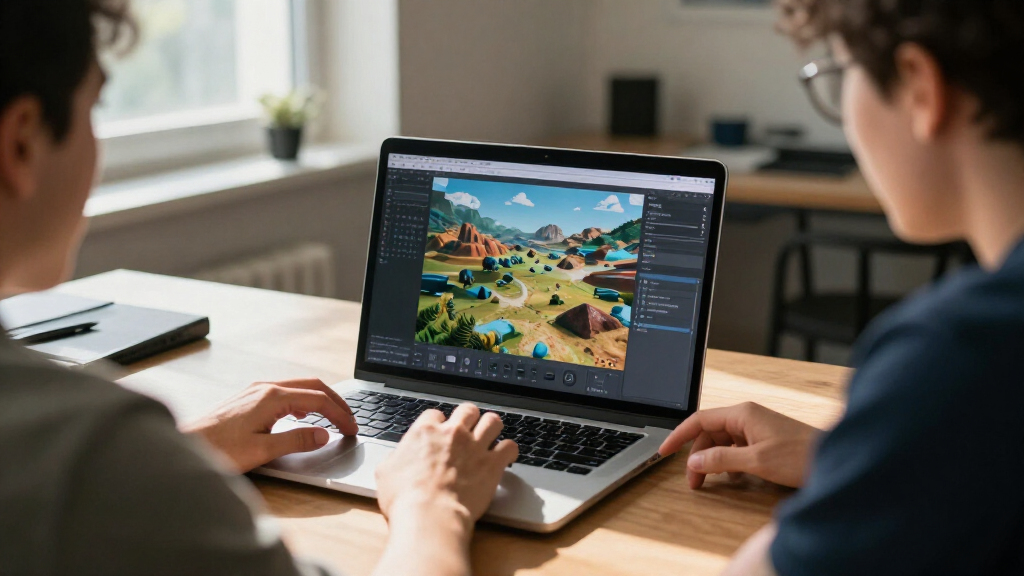
Google DeepMind announced Genie 4, a real-time world model that generates interactive scenes with sound and accepts live text instructions. The capabilities described are vendor claims based on selected demos, and the model is limited to trusted testers; Google has not announced general availability, pricing or benchmark results.
Google DeepMind announced Genie 4 on Oct. 27, describing it as a real-time world model that generates interactive scenes with audio and lets users change them through controls and text prompts. The announcement matters to developers and businesses exploring AI-generated environments, but access is currently limited to trusted testers, and Google has not published benchmark results or a general release date.
DeepMind says users can move through generated scenes with keyboard and mouse controls and issue instructions while the scene runs, such as changing the weather or adding an object. The company also says Genie 4 generates sound alongside visuals, including ambient effects, music and character dialogue. Its announcement presents these functions through company-selected demonstration clips, so they should be treated as vendor claims rather than independently measured results.
DeepMind says the Gemini 3.8 Flash model helps interpret goals, break them into steps and monitor the generated scene. The source describes a robotics demonstration in which a Gemini model planned a task and Genie 4 simulated an Apptronik Apollo humanoid playing checkers. No physical robot took part, according to the source’s account of the demonstration.
DeepMind acknowledges that details and objects can shift or drift over time and says the model supports “a few minutes of continuous interaction.” TechCrunch and Bloomberg, as cited by heise, reported scenes lasting up to about two minutes; that specific duration does not appear in DeepMind’s own text. The source says upcoming access is planned for Google AI Ultra subscribers through Project Genie and early Gemini API partners, but Google has given no date or API price.
World models · Briefing · October 2026
Google Genie 4 Explained: Capabilities, Weak Spots, And Who Can Use It
Google DeepMind describes Genie 4 as a real-time model for interactive scenes with sound. The demos point to new ways to explore generated worlds, while access and performance evidence remain limited.
01 / What it does
Interactive worlds, generated in real time
Genie 4 is presented as a scene people can explore and alter, rather than a fixed video. These capabilities are vendor claims shown through company-selected demonstrations.
Explore
Move through a scene
DeepMind says users can navigate generated environments with keyboard and mouse controls while the scene unfolds.
Instruct
Change it live
Text prompts can direct changes during interaction, such as adjusting the weather or adding an object.
Hear
Audio with visuals
The company says scenes can include ambient effects, music and character dialogue alongside generated imagery.
02 / How the loop works
From instruction to unfolding scene
The announcement says Gemini 3.8 Flash helps interpret goals, break them into steps and monitor the generated scene.
A world model predicts what a scene may look like next from previous frames and a user’s actions or instructions.
Unlike a conventional game engine, the approach described for Genie 4 does not rely on a stored 3D map of every object. It generates subsequent frames, which can make scenes visually rich while details shift over time.
Practical distinction: a generated simulation can help explore an idea, but it does not establish that a physical robot can perform a task safely or reliably.
Input
Set a goal
Describe the scene or desired change.
Interpret
Plan steps
Gemini helps parse and monitor the goal.
Generate
Render next frames
The world responds as interaction continues.
Experience
See and hear
Visuals and sound form the scene.
03 / The series
From video prediction to real-time worlds
Earlier releases offer context for DeepMind’s claims of improved realism and interaction. They do not independently verify Genie 4’s performance.
February 2024
Genie
Announced as a model for generating simple 2D worlds.
December 2024
Genie 2
Could generate 3D worlds from a single image, according to DeepMind.
August 2025
Genie 3
Described as the first real-time world model, at 720p and 24 fps for a few minutes.
October 2026
Genie 4
Announced with interactive audio and live text instructions; independent results remain unpublished.
04 / Evidence check
Promising demos, open questions
Selected demonstrations can illustrate a concept. They cannot show how consistently it works across prompts, scenes or longer sessions.
“details and objects can shift or drift over time”
Google DeepMind · Stated limitation
What is still unmeasured?
The source material includes no benchmark numbers. It does not establish broad prompt performance, instruction-following consistency or how scene quality changes over longer interactions. DeepMind describes “a few minutes” of continuous interaction. Reports of scenes lasting about two minutes come from media accounts cited by heise, not DeepMind’s own text.
Research is not a robot test
A described demonstration used a Gemini model to plan a task and Genie 4 to simulate an Apptronik Apollo humanoid playing checkers. The source says no physical robot took part. Simulation is not evidence of real-world robot capability.
“our first real-time world model to generate audio natively”
Google DeepMind · Company description
05 / Uses and safeguards
Potential is not proof of readiness
The source describes early creative and research uses. Teams should treat these as reported possibilities until broader evidence is available.
Prototyping
Games and film
Testers reportedly offered feedback on game prototypes and film previsualization. These are reported uses, not independently established outcomes.
Research
Simulated tasks
Generated environments may help teams explore plans or tasks, while remaining distinct from physical-world performance.
Provenance
SynthID watermarking
Google says video and audio outputs will include invisible SynthID watermarks. The source does not establish detection reliability after editing or reposting.
06 / Access status
Who can use Genie 4?
Access details are incomplete. No public release date, API price or precise eligibility rules are provided in the source.
Current access is restricted
The source says Genie 4 is available to trusted testers. Google has described planned access through Project Genie for Google AI Ultra subscribers and for early Gemini API partners.
Prospective users still need details on timing, eligibility, product terms and commercial-use restrictions. Further public testing could clarify consistency, interaction length and watermark handling.
Available now
Trusted testersLimited access, according to the source.
Planned
Google AI UltraAccess through Project Genie; no timetable given.
Planned
Early Gemini API partnersNo API price or general release date announced.
07 / Key questions
Genie 4, in brief
The current picture is based on Google’s descriptions and selected demos, with important performance and access details still open.
What is Genie 4?
A world model that Google DeepMind says generates interactive visual scenes in real time. Users can move through them and give text instructions while they run.
Can it generate sound?
DeepMind says it creates audio alongside visuals, including environmental sound, music and dialogue. Published benchmark results are absent from the source material.
Who can use it now?
The source says access is limited to trusted testers. Planned access includes Google AI Ultra subscribers through Project Genie and early Gemini API partners.
What are the known limits?
Objects and details may drift, and DeepMind describes interaction lasting a few minutes. Media reports cited by the source mention about two minutes.
Was the robot demo physical?
No. The source describes a simulated Apptronik Apollo humanoid playing checkers; no physical robot was involved.
What remains unknown?
There is no announced general release date, API price, benchmark set or precise eligibility and commercial-use terms in the source material.
Interactive Worlds for AI Development
Genie 4 points toward AI systems that can produce a scene people can explore and alter, rather than only render a fixed video. If the announced functions hold up beyond selected demos, interactive environments could help teams sketch game concepts or visualize film scenes. DeepMind reports that testers have offered feedback on film previsualization and game prototypes; these are reported uses, not independently established outcomes.
The robotics example also illustrates a possible research use: simulating tasks for an AI planner. But a generated simulation is not evidence that a physical robot can perform the task safely or reliably. The distinction matters for companies deciding whether to treat Genie 4 as a production tool, a prototyping aid or an early research system.
Realistic images paired with sound may also make synthetic media more convincing. The source says Google will add invisible SynthID watermarks to Genie 4 video and audio outputs. That is a disclosure measure described by Google; the available material does not establish how reliably the watermark can be detected after editing or reposting.
Products Worth Considering

Logitech MX Master 4 for Mac, Ergonomic Bluetooth Mouse with Haptic Feedback, Ultra-Fast Scrolling, USB-C Charging, for MacOS, iPadOS, Windo

LG UltraGear 27-Inch QHD OLED Gaming Monitor, 240Hz, 0.03ms, G-SYNC Compatible, FreeSync Premium Pro, HDMI 2.1

Samsung 32-Inch Odyssey OLED G8 (G80SH) 4K Gaming Monitor
As an affiliate, we earn on qualifying purchases.
From Video Prediction to Genie 4
A world model predicts what a scene will look like next based on previous frames and a user’s actions or instructions. Unlike a conventional game engine, the approach described for Genie 4 does not rely on a stored 3D map of every object. The model generates subsequent frames, which can produce visually rich scenes but may also cause objects or details to change as the interaction continues.
The source traces the series from the first Genie, announced in February 2024 as a model for simple 2D worlds, to Genie 2 in December 2024, which generated 3D worlds from a single image. Genie 3, announced in August 2025, was described by DeepMind as its first real-time world model, running at 720p and 24 frames per second for a few minutes. Those earlier specifications and descriptions provide context for Google’s claim that Genie 4 improves realism and interaction; they do not independently verify the new model’s performance.
““details and objects can shift or drift over time””
— Google DeepMind
Performance and Access Remain Open
DeepMind has not published benchmark numbers in the source material, and the demonstrations were selected by the company. The material does not establish how Genie 4 performs across a broad set of prompts, how consistently it follows instructions, or how scene quality changes during longer sessions. The reported scene duration of about two minutes comes from media accounts cited by the source, rather than DeepMind’s announcement.
Access terms remain incomplete. The source says trusted testers can use the system now and describes planned access for Google AI Ultra subscribers and early Gemini API partners, but it gives no launch date, API price or precise eligibility rules. It is also unclear what restrictions will apply to commercial use and whether SynthID identification will remain effective when generated media is transformed or shared.
Tester Access and Release Details
Google has said access will expand to Google AI Ultra subscribers through Project Genie and to early Gemini API partners, but the source provides no timetable. Prospective users will need further announcements from DeepMind for eligibility details, product terms and pricing. Until then, the practical evidence is limited to trusted-tester access and the demonstrations described by the company.
Further public testing could clarify how well scenes remain consistent, how long interactions can continue and whether text instructions reliably change the world in real time. Details about benchmark methods, commercial availability and the handling of watermarks would also help developers assess whether Genie 4 fits their work.
Key Questions
What is Google Genie 4?
Genie 4 is a world model that Google DeepMind says generates interactive visual scenes in real time. Users can move through scenes and provide text instructions while they run.
Can Genie 4 generate sound?
DeepMind says it generates audio alongside visuals, including environmental sound, music and dialogue. These capabilities are presented in the company’s own demonstrations and have not been accompanied by published benchmark results in the source material.
Who can use Genie 4 now?
The source says access is limited to trusted testers. Google has described planned access for Google AI Ultra subscribers through Project Genie and early Gemini API partners, without giving a release date or API price.
What are Genie 4’s known limitations?
DeepMind says objects and details may shift or drift over time and describes continuous interaction lasting a few minutes. The source also reports media accounts of scenes lasting about two minutes, a figure not stated in DeepMind’s own text.
Does the robotics demo show a real robot using Genie 4?
No. The source describes a simulated Apptronik Apollo humanoid playing checkers; it says no physical robot was involved in that demonstration.
Source: Thorsten Meyer AI