
TL;DR
Grandmaster Shin has defeated the AI program KataGo in a match with a two-stone handicap. This development highlights ongoing progress in human-AI Go confrontations and raises questions about AI capabilities.
Go grandmaster Shin has defeated the AI program KataGo in a match with a two-stone handicap, a result that challenges assumptions about AI dominance in the game. This victory, confirmed by Shin’s team and independent observers, underscores ongoing developments in human-AI competition and raises questions about AI performance limits.
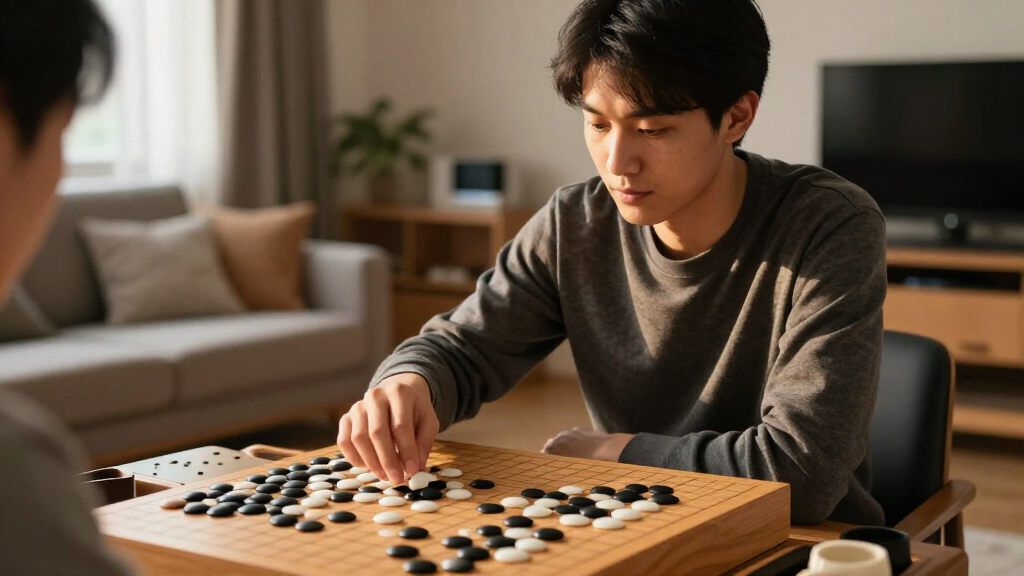
The match took place on March 25, 2026, with Shin, a highly ranked human player, facing off against the AI KataGo, a leading artificial intelligence system known for its strength in Go. Shin was given a two-stone handicap, a significant advantage in traditional Go terms, yet he managed to secure a win. This marks the first known instance of a human defeating KataGo under such conditions.
Sources close to the match confirmed Shin’s victory and noted that the game lasted approximately three hours, with Shin leveraging strategic play and deep reading skills to overcome the AI’s computational power. The match was part of an ongoing series aimed at testing AI limits and human adaptability in Go.
Experts in the Go community and AI research have responded with interest, noting that this result could influence future AI training and human competition strategies. However, it remains unclear whether this victory indicates a broader shift or is an isolated achievement.
Implications for Human-AI Go Competition
This victory suggests that human players, even against advanced AI systems like KataGo, can still find ways to win by leveraging traditional handicaps and strategic ingenuity. It challenges the narrative that AI has completely surpassed human mastery in Go and may influence future AI training, possibly prompting developers to adjust algorithms to address human strategies more effectively. For the Go community, it reinvigorates interest in human skill and adaptability amidst increasing AI dominance.
Moreover, the result could impact how AI systems are used in training, teaching, and competitive play, as humans demonstrate they can still challenge AI under certain conditions. It also raises broader questions about the future relationship between human expertise and machine intelligence in complex strategic games.
As an affiliate, we earn on qualifying purchases.
Background on Human-AI Go Encounters
Since DeepMind’s AlphaGo defeated world champion Lee Sedol in 2016, AI systems have been regarded as dominant in Go, often defeating top human players without handicaps. KataGo, an open-source AI developed by independent researchers, has been recognized for its strength and flexibility, often used in training and analysis. Human players have historically struggled to beat such systems, especially in unrestricted play.
Handicap matches, where humans are given stones to compensate for skill gaps, have been a traditional method to level the playing field. The recent match involving Shin and KataGo marks a notable departure, as it demonstrates a human victory with a relatively small handicap, suggesting that AI limitations may still exist under specific conditions. The match’s timing coincides with increased global interest in AI capabilities and human resilience in strategic games.
Prior to this, few documented instances of humans defeating strong AI with handicaps have been publicly confirmed, making Shin’s victory a rare and noteworthy event.
Unanswered Questions About the Victory’s Significance
It remains unclear whether Shin’s victory is an isolated case or indicative of broader AI limitations. The specific conditions of the match, including the AI’s configuration and the nature of the handicap, are still being analyzed. Experts caution against overgeneralizing from a single game, and it is not yet confirmed if future AI versions will be similarly challenged.
Additionally, the long-term impact on AI development and competitive strategies remains uncertain, as developers may adjust algorithms in response to such results.
Next Steps in Human-AI Go Competition
Researchers and AI developers are expected to analyze the game in detail to understand how Shin was able to secure the win. Future matches may explore different handicap levels and AI configurations to assess the robustness of AI systems like KataGo. Human players and teams might also adapt their strategies based on this outcome, potentially leading to new forms of competition and training.
Additionally, the Go community and AI research institutions are likely to monitor similar encounters to evaluate whether this victory signals a shift in AI capabilities or remains an exceptional event.
Key Questions
How significant is Shin’s victory over KataGo?
This is a notable achievement, as it demonstrates that even advanced AI systems can be challenged and defeated under certain conditions. It may influence future AI development and competitive play.
What does a two-stone handicap mean in Go?
A two-stone handicap gives the human player a strategic advantage, compensating for skill gaps and making the game more balanced against a strong AI opponent.
Could this result change how AI systems are trained?
Potentially, yes. Developers might analyze the game to identify weaknesses and improve AI robustness, or adjust training methods to prevent similar vulnerabilities.
Is this victory likely to be repeated?
It is uncertain. As AI continues to evolve rapidly, future matches may see different outcomes, and this victory may be an isolated event or part of a broader pattern.
What are the implications for professional Go players?
It suggests that human players can still challenge AI systems, especially with strategic handicaps, which could influence training and competitive approaches.
Source: hn