
🔍 Read the full analysis: Claude’s AI Innovations And Their Influence On Biomolecular Modeling on ThorstenMeyerAI.com

Get business pricing on tech for your team
- Business-only prices and quantity discounts
- Tax-exempt purchasing
- Multiple users, one account, clear invoices
TL;DR
Anthropic claims its Claude AI models are being used by researchers to support biomolecular modeling, including tasks like analyzing protein structures and writing scientific code. These applications aim to accelerate research processes, but independent verification is lacking.
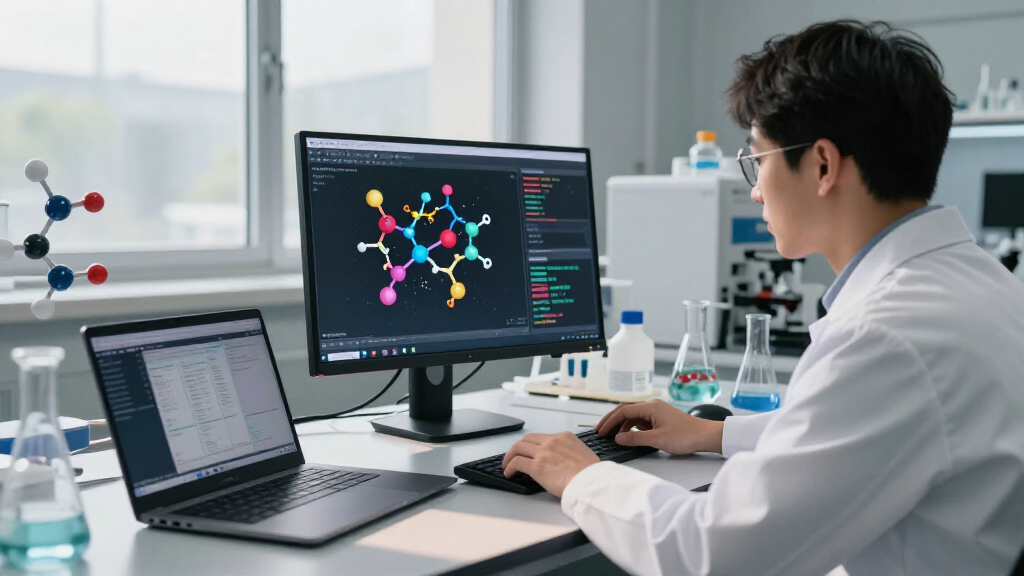
Anthropic has announced that its Claude AI models are being actively used by researchers to assist in biomolecular modeling tasks, including analyzing protein structures and generating scientific code. The company presents this as part of a broader effort to enhance laboratory workflows and accelerate scientific discovery, positioning Claude as a versatile AI assistant rather than a dedicated predictive tool.
According to Anthropic, researchers deploy Claude in several key areas of biomolecular research. One prominent application involves code generation and debugging for molecular dynamics simulations and structural biology pipelines, where custom scripts are often time-consuming to develop and maintain. Anthropic states that Claude helps by drafting, explaining, and repairing research code, reducing the time researchers spend on scripting tasks.
Another use case described involves knowledge synthesis, where Claude digest large volumes of scientific literature and experimental data. This helps researchers stay current amid thousands of publications annually, streamlining the process of literature review and data interpretation. The company also highlights applications in structuring and reasoning about molecular data, such as protein structures, binding sites, and sequence information, through conversational interfaces rather than traditional specialized software.
Anthropic emphasizes that these functions are meant to support, not replace, existing scientific methods. The goal is to compress the intermediate steps—like data wrangling, scripting, and literature review—that traditionally slow down the transition from hypothesis to discovery. The account underscores that AI’s role in biomolecular modeling is to enhance productivity and reduce tedious manual tasks, thereby enabling faster research cycles.
Potential Impact on Drug Discovery and Biological Research
If validated, the integration of Claude AI into biomolecular workflows could significantly shorten research timelines in drug development, enzyme engineering, and basic biological studies. By automating routine tasks such as code writing, literature synthesis, and data interpretation, AI tools like Claude may enable scientists to focus more on experimental design and hypothesis testing. This could lead to faster identification of drug candidates, better understanding of molecular mechanisms, and more efficient use of research resources.
Furthermore, the adoption of AI assistants in laboratory settings signals a shift toward more integrated, software-enabled scientific workflows. For pharmaceutical and biotech industries, this could translate into competitive advantages through increased productivity and reduced costs. However, these benefits depend on the reliability and accuracy of AI-assisted tasks, which remain to be independently verified.
protein structure analysis software
As an affiliate, we earn on qualifying purchases.
As an affiliate, we earn on qualifying purchases.
Biomolecular Modeling’s Evolution with AI Technologies
Biomolecular modeling has been transformed over recent years by machine learning breakthroughs, notably AlphaFold, which demonstrated that AI could predict protein structures with near-experimental accuracy. This achievement earned the 2024 Nobel Prize in Chemistry and established a new paradigm where AI handles the prediction-heavy aspects of biology, allowing human researchers to focus on experimental design and interpretation.
Anthropic’s approach differs from this trend. Instead of competing with structure prediction systems, Claude is positioned as a general-purpose assistant that supports the entire research workflow—drafting code, summarizing literature, and helping interpret data—thus complementing existing predictive tools rather than replacing them.
While the claims about Claude’s utility are promising, they are primarily based on Anthropic’s own reports. Independent validation, peer-reviewed studies, or detailed benchmarks are not yet available, making it difficult to gauge the true impact of Claude in this domain.
“Anthropic’s account suggests that Claude is being adopted for routine but critical tasks in biomolecular research, which could accelerate workflows significantly.”
— Thorsten Meyer, AI researcher
Verification and Independent Evidence for Claude’s Effectiveness
Currently, all claims about Claude’s utility in biomolecular modeling come from Anthropic’s own publications. No peer-reviewed studies, independent benchmarks, or detailed user reports are publicly available to confirm the extent of its impact. It remains unclear how much time or accuracy gains Claude provides compared to traditional methods, or whether its use is widespread among research groups.
Further validation is needed to determine whether these applications are representative or limited to early adopters. The absence of quantitative metrics makes it difficult to assess the true value and limitations of Claude’s integration into scientific workflows.
Tracking Independent Studies and Industry Adoption
The next step will be for independent researchers and laboratories to evaluate Claude’s performance in real-world biomolecular research. Peer-reviewed publications or detailed case studies demonstrating measurable improvements in productivity or accuracy would help substantiate Anthropic’s claims. Additionally, monitoring how pharmaceutical and biotech companies incorporate Claude into their workflows will provide practical signals of its utility and reliability.
Updates to Claude’s models, especially those aimed at scientific code generation and long-form reasoning, are expected to improve its capabilities. Researchers and industry observers should watch for new releases and independent evaluations over the coming months.
Key Questions
How reliable is Claude in generating scientific code?
While Anthropic claims that Claude can assist with code drafting and debugging, there is no independent validation yet. Users should verify AI-generated code carefully, as errors can occur.
Is Claude replacing existing biomolecular prediction tools like AlphaFold?
No. Anthropic describes Claude as a supporting assistant that complements tools like AlphaFold by handling tasks such as literature review, data interpretation, and scripting, rather than replacing predictive models.
What evidence supports Claude’s effectiveness in biomolecular research?
Currently, all evidence is from Anthropic’s own reports. Independent validation, peer-reviewed studies, or detailed benchmarks are not yet available, so the claimed benefits should be viewed cautiously.
How might Claude impact future drug discovery efforts?
If validated, Claude could accelerate early-stage research by automating routine tasks, potentially shortening drug development timelines and reducing costs. However, its actual impact remains to be confirmed through independent studies.
When will independent evaluations of Claude’s biomolecular applications be available?
It is not yet clear when peer-reviewed or industry-based evaluations will be published. Researchers and industry stakeholders should monitor upcoming scientific publications and product updates for more information.
Primary source: Anthropic · via ThorstenMeyerAI.com
Fall Picks
fall essentials
As an affiliate, we earn on qualifying purchases.