🔍 Read the full analysis: AI-Constructed Digital Archive Offers Fresh Views On La Citadelle’s 1693 Siege on ThorstenMeyerAI.com
TL;DR
A new AI-generated digital archive recreates the 1693 siege of La Citadelle, providing an immersive, interactive experience. This development offers fresh insights into historical military engineering and storytelling, with ongoing refinement and analysis underway.
An AI-generated interactive exhibition has been unveiled, offering a detailed, cinematic reconstruction of the 1693 siege of La Citadelle. The digital project, created through a layered, code-driven process, aims to provide a new perspective on historical military engineering and siege warfare, making it accessible to both scholars and the general public.
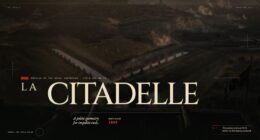
The digital exhibit, titled Room 109 of 175: La Citadelle — An Anatomy of Siege, 1693, employs a sophisticated, scroll-driven diagram that dynamically visualizes terrain, troop movements, and artillery fire without relying on static images. Instead, it uses layered SVGs, CSS, and canvas elements, orchestrated by AI-powered logic to create a seamless, cinematic experience. The project follows a three-stage workflow: initial layered construction, iterative AI critique for visual coherence and historical plausibility, and final approval by an art director.
According to the creators, the exhibit balances historical fidelity with artistic storytelling, emphasizing the geometry of fortifications, earthworks, and military tactics used during the siege. The site’s aesthetic employs a restrained palette inspired by archival materials—parchment, fortress ink, smoke gray, and blood-red accents—and combines elegant typography with animated, interactive visualizations. Notably, the siege map layers animate to simulate earthworks being dug, batteries firing, and breaches forming, all driven by JavaScript functions that update stroke offsets and trajectories.
Developed without embedded images or external assets, the entire visualization is created through code, ensuring scalability and device responsiveness. The project’s workflow was guided by an AI field manual emphasizing layered architecture, emotional depth, and precise interactions, with final approval by a human art director. The exhibit is accessible via a live website, inviting viewers to explore the siege from multiple angles and understand the engineering principles behind Vauban’s fortress design.
Implications for Historical Visualization and Education
This digital reconstruction represents a significant advancement in how history is visualized and taught. By leveraging AI and code-based visualization techniques, the project offers an immersive, interactive experience that enhances understanding of complex military engineering and siege tactics. It also demonstrates how AI can facilitate the creation of detailed, scalable digital monuments that balance accuracy with artistic storytelling, potentially transforming digital history exhibits and educational tools.
Furthermore, the project highlights the potential for AI to critique and refine visual coherence and historical plausibility, ensuring that digital reconstructions are both engaging and credible. As such, it could influence future developments in digital archaeology, virtual museums, and interactive history education, making complex military history accessible and engaging for broader audiences.
interactive history museum display
As an affiliate, we earn on qualifying purchases.
As an affiliate, we earn on qualifying purchases.
Historical and Technological Foundations of the Siege Visualization
The siege of La Citadelle in 1693 was a pivotal event in military history, exemplifying Vauban’s fortification principles and siegecraft. Traditionally documented through engravings and written accounts, understanding its intricacies has been limited by static images and text. Recent advances in digital visualization, combined with AI, have opened new avenues for exploring such historical events.
The project follows a lineage of digital reconstructions that aim to animate and simulate historical battles, but it distinguishes itself through its code-centric, image-free approach. This method ensures high scalability and device compatibility, while also allowing for detailed, layered interactions that mimic the dynamic, cinematic nature of the siege. The use of AI critique and approval processes ensures that the final product maintains a high standard of historical and aesthetic fidelity, setting a precedent for future digital history projects.
Unresolved Questions About Accuracy and Interactivity
While the digital exhibit demonstrates impressive technical and artistic achievement, it remains unclear how accurately it reflects the actual historical details of the 1693 siege. The critique process involves AI analysis and human approval, but the extent of historical validation is still being evaluated. Additionally, the long-term engagement and educational effectiveness of such code-driven visualizations are still under review, with ongoing assessments needed to confirm their pedagogical value.
Future Developments and Validation Efforts
Developers plan to conduct further peer review and historical validation to ensure the exhibit’s accuracy. They also aim to expand interactive features, such as allowing users to manipulate troop movements or explore different siege scenarios. Additionally, the project team intends to publish detailed technical documentation and collaborate with historians to refine the visualization’s fidelity. Public access and educational integration are expected to grow as the project matures, potentially influencing digital history standards.
Key Questions
How accurate is the digital reconstruction of the 1693 siege?
The reconstruction is designed to balance artistic storytelling with historical plausibility, but its full accuracy is still under review. It employs AI critique to ensure coherence, yet detailed validation by historians is ongoing.
What makes this digital exhibit different from traditional reconstructions?
Unlike static images or engravings, this project uses layered SVGs, CSS, and canvas elements to create a dynamic, cinematic experience entirely driven by code, without relying on embedded images or external assets.
Can users interact with the siege visualization?
Yes, the exhibit allows users to scroll through the siege timeline, observe animations of earthworks, artillery fire, and breaches, and explore different layers of the fortification and military movements.
Will this digital reconstruction be used for educational purposes?
Potentially, yes. The creators aim to integrate it into digital history curricula and virtual museums, pending further validation of its accuracy and educational effectiveness.
What are the technical foundations of this project?
The exhibit is built entirely using HTML, CSS, and JavaScript, with no external images or frameworks, ensuring scalability and device responsiveness. AI guides the critique and approval process to maintain quality.
Source: ThorstenMeyerAI.com