To enhance biobutanol output, you should consider implementing cutting-edge online product separation methods. Techniques like two-stage gas stripping can continuously remove byproducts during fermentation, boosting butanol concentration. Additionally, integrating advanced methods such as membrane pervaporation ensures higher purity and energy savings. By managing inhibitory products effectively, you'll maximize your yield and efficiency. Staying updated on these innovative techniques could reveal even more strategies for optimizing your production process.
Key Takeaways
- Implementing in situ separation methods, such as two-stage gas stripping, continuously removes butanol and byproducts during fermentation for improved yields.
- Utilizing advanced separation techniques like membrane pervaporation enhances butanol purity and reduces energy consumption during the separation process.
- Coupling separation methods with continuous fermentation maintains optimal conditions and maximizes butanol production efficiency.
- Regularly managing byproduct levels through separation techniques prevents fermentation inhibition and sustains higher butanol output.
- Exploring the integration of advanced separation technologies can significantly boost the overall recovery rates of biobutanol production.
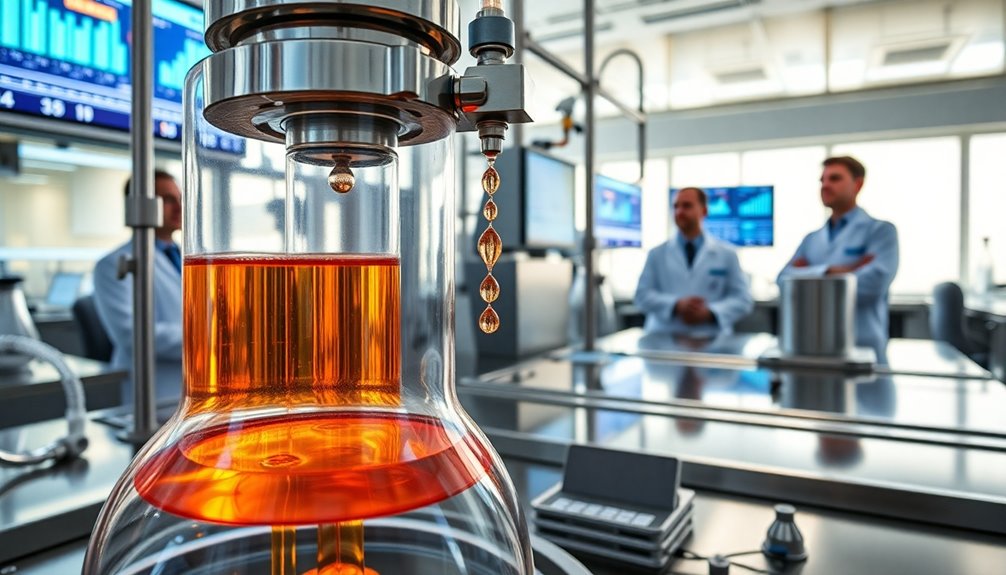
Another key aspect is metabolic engineering. By employing genetic modifications, you can enhance strain robustness and target specific metabolic pathways to increase butanol production. Utilizing CRISPR-Cas tools for precise gene manipulation can significantly improve strain performance.
Additionally, considering substrate selection is essential. Opting for underutilized and renewable substrates not only cuts production costs but also enhances sustainability in biobutanol production.
Selecting underutilized and renewable substrates is crucial for reducing costs and boosting sustainability in biobutanol production.
Integrating advanced separation techniques during fermentation can take your output to the next level. Membrane pervaporation offers a highly efficient method for separating butanol from fermentation broths, providing energy savings and increased purity. Furthermore, folic acid supplementation has been shown to significantly enhance butanol production, underscoring the importance of metabolic stimulators in fermentation processes.
Gas stripping methods can effectively remove inhibitory products, preventing fermentation inhibition and enhancing overall recovery.
In situ separation methods, like two-stage gas stripping, can dramatically boost butanol concentration and yield by continuously removing unwanted byproducts during fermentation. Coupling these methods with continuous fermentation ensures a steady removal of products, which is vital for enhancing fermentation efficiency.
Techniques like cell immobilization can also be beneficial, as they allow for the repeated use of biocatalysts, leading to improved stability and efficiency over time.
biobutanol fermentation separation equipment
As an affiliate, we earn on qualifying purchases.
As an affiliate, we earn on qualifying purchases.
Frequently Asked Questions
What Is Biobutanol and Its Applications?
Biobutanol's a four-carbon alcohol made through biomass fermentation, mainly from sugars.
It's got potential as a fuel alternative due to its similar properties to gasoline, making it suitable for blending and certain engines without modifications.
You can also find it in various industrial applications, like solvents, plasticizers, and paints.
Its versatility, coupled with reduced greenhouse gas emissions, makes biobutanol an environmentally friendly choice in today's fuel and chemical markets.
How Does Biobutanol Compare to Other Biofuels?
They say, "You can't judge a book by its cover," and the same goes for biofuels.
Biobutanol stands out with 25% more energy than ethanol and lower vapor pressure, making it safer and more efficient. You can use it directly in gasoline engines, unlike many other biofuels.
Plus, it's renewable and reduces harmful emissions, emphasizing its potential as a sustainable alternative in the ever-evolving energy landscape.
What Are the Environmental Benefits of Biobutanol?
Biobutanol offers significant environmental benefits.
You'll notice it reduces carbon emissions by using organic waste and renewable biomass. This eco-friendly fuel promotes cleaner combustion, minimizing air pollutants and preventing groundwater contamination.
By diversifying energy sources, it bolsters energy security and lessens reliance on fossil fuels.
Additionally, biobutanol contributes to climate change mitigation and supports sustainable resource management, making it a vital player in achieving long-term environmental goals.
Can Biobutanol Be Produced From Waste Materials?
Yes, you can produce biobutanol from waste materials. By utilizing food waste and agricultural residues, you convert these discarded resources into valuable biofuels.
Bacterial strains like *Clostridium beijerinckii* efficiently ferment this biomass into biobutanol, reducing environmental impact. This process not only repurposes waste but also helps minimize carbon emissions, promoting sustainability.
What Is the Current Market Demand for Biobutanol?
The current market demand for biobutanol is on the rise, driven by the increasing need for renewable energy sources.
You'll notice that industries like transportation and chemicals are major consumers, utilizing biobutanol for biofuels and various products.
As environmental regulations tighten, more companies are turning to biobutanol to meet sustainability goals.
With projected market growth, it's clear that biobutanol is becoming an essential component in the shift towards greener alternatives.
Conclusion
In conclusion, by embracing cutting-edge online product separation methods, you can significantly boost biobutanol output and transform your production processes. This innovative approach not only streamlines efficiency but also maximizes yield in ways that feel almost miraculous. As you implement these advanced techniques, you'll find yourself at the forefront of sustainable energy solutions, paving the way for a greener future. Don't underestimate the power of technology to revolutionize your biobutanol production journey!