📊 Full opportunity report: How Retail Signals Help Track Citroën Hydraulic System Interest on IdeaNavigator AI — validation score, market gap, and execution plan.

Get business pricing on tech for your team
- Business-only prices and quantity discounts
- Tax-exempt purchasing
- Multiple users, one account, clear invoices
TL;DR
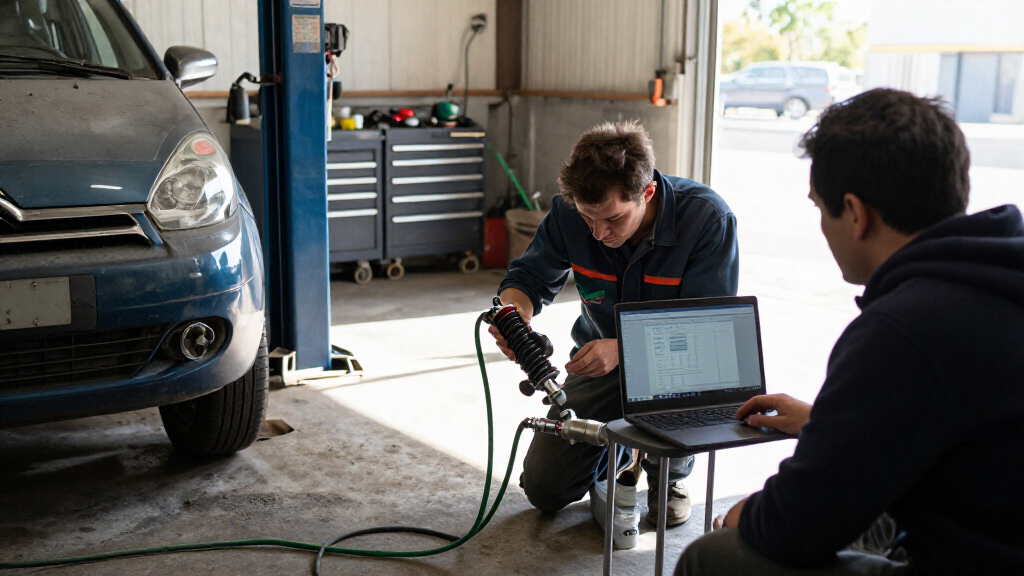
IdeaNavigator AI proposes testing a narrow monitor that tracks vehicle news, recalls and regulation, then translates relevant items into short briefs for independent dealerships and auto shops. The proposal cites a Hacker News signal score of 88/100, but provides no underlying measurement details or evidence that the tool changes business decisions.
IdeaNavigator AI has proposed a focused monitor that would track vehicle launches, recalls and regulation, then turn relevant items into briefings for independent dealership owners, sales leads and auto shops. The concept uses “Citroën Hydraulic System” as an example of a retail signal to assess, but the available description does not establish that this is a new Citroën product, a recall, or a confirmed development affecting retailers.
The proposal addresses a specific information problem: developments that may affect automotive retail can appear across news coverage, online forums and filings, leaving shop and dealership decision-makers to identify what matters on their own. The proposed tool would monitor Hacker News and similar feeds, filter items for the intended users, and summarize each one as what changed, why it matters and what to do.
IdeaNavigator AI describes the concept as a narrow first test for an owner or sales lead at an independent dealership or auto shop, rather than a general automotive news service. It says a Hacker News item surfaced with an 88/100 signal. No scoring method, comparison baseline, date range or underlying post details are provided, so the figure cannot be treated as proof of demand or market size.
The suggested business model is a subscription for retail operators seeking an early, role-filtered read on launches, recalls and regulatory changes. To test the idea, the proposal recommends hand-delivering the Citroën-related brief and two other automotive items to five people matching the target customer profile, then tracking whether any recipient changes a decision or forwards a brief to a colleague. No customer responses or test outcomes are included.
Track the signals that matter to retailers
IdeaNavigator AI proposes turning vehicle news, recalls and regulation into short briefs for independent dealerships and auto shops. The concept is unvalidated, and the Citroën example is not a confirmed announcement.
From scattered updates to useful briefs
The proposed monitor would filter updates for independent automotive retailers and explain what changed, why it matters and what to do.
Track vehicle launches, recalls and regulation across Hacker News and similar feeds.
Select items relevant to dealership owners, sales leads and auto shops.
Summarize what changed, why it matters and what readers could do.
What the Citroën example tells us
- “Citroën Hydraulic System” is an example retail signal.
- The phrase could be used to assess whether a brief helps retailers.
- No specific vehicle, announcement, technical change or date is identified.
- No new product, recall or regulatory action is established.
Test for action, not attention
The proposed first test checks whether the information changes behavior.
Deliver three briefs
Share the Citroën example and two other automotive items with five people matching the target customer profile.
Record what they do
Track whether recipients change a decision or forward a brief to a colleague.
Potential value for small operators
A Test of Faster Retail Decisions
For a small dealership or repair shop, a relevant vehicle development may affect what staff tell customers, which work they prepare for, or whether they need to check a recall or a regulatory notice. A concise alert could reduce the time spent scanning unrelated updates, particularly for operators without a dedicated research or communications team. That benefit is the product hypothesis, not a demonstrated outcome.
The proposed validation focuses on behavior rather than general interest: whether a recipient changes a decision or shares the information. That distinction matters. A high attention score or positive reaction to a sample brief would not, on its own, show that a paid service saves time or improves a business decision. The five-person test could provide early qualitative feedback, but it would be too small to establish broad demand or prove subscription economics.
Products Worth Considering

Kindle Paperwhite (16 GB) – 7 Glare-Free Display, Black

Samsung Galaxy Tab A11+ 11-Inch Tablet, 6GB RAM, 128GB Storage, Expandable Storage, Gray

Anker SOLIX S2000 Portable Power Station, 2,010Wh, 1,500W
As an affiliate, we earn on qualifying purchases.
From Scattered Feeds to Briefs
The idea is framed around a familiar challenge in business information: relevant announcements are distributed among different channels, while generic roundups may not arrive quickly or reflect a particular reader’s role. The proposed monitor would narrow the stream to vehicle launches, recalls and regulation and present each selected item in a consistent format for automotive retail.
“Citroën Hydraulic System” is presented as an example signal, not as a fully documented news event. The proposal does not identify a specific announcement, vehicle, technical change or date tied to the phrase. Readers should not infer from the example alone that Citroën has launched or changed a hydraulic system, or that a recall or regulatory action has occurred.
The development described here is therefore a product opportunity and test plan, rather than a report of a functioning service or an automotive industry announcement. The key next evidence would be whether target users find the brief timely and actionable when presented alongside other real updates.
Demand and the Citroën Signal
Several points remain unverified. The available description does not explain what “Citroën Hydraulic System” refers to, identify a confirmed launch, recall or regulation, or give a date and link to the item that prompted the concept. It also does not show how the stated 88/100 score was calculated or what it measures.
There is no evidence yet that the monitor has been built, that it can reliably distinguish actionable developments from noise, or that independent retailers will pay for it. The suggested five-person exercise is a proposed test, not a completed one; its findings, participant selection and criteria for judging a decision change have not been reported.
Five Retailers to Test the Brief
The next stated step is to deliver three briefs—the Citroën example and two additional items about launches, recalls or regulation—to five people who match the intended customer profile. The test should record whether recipients act on a brief, change a decision or pass it to a colleague, rather than relying only on stated interest.
Any reported findings would help clarify whether the concept merits a working monitor or paid pilot. Until those results are available, the proposal remains an early-stage idea; the timing and scope of any product build, as well as the identity and significance of the Citroën-related item, are not established.
Source: IdeaNavigator AI
Key Questions
Is Citroën announcing a new hydraulic system?
The material does not confirm a new Citroën announcement. “Citroën Hydraulic System” is used as an example signal, without a specific vehicle, change, date or linked announcement.
What would the proposed monitor do?
It would watch Hacker News and similar feeds for vehicle launches, recalls and regulation, filter for independent retail businesses, and summarize relevant items in a short action-oriented brief.
What does the 88/100 signal score mean?
The description gives the score but does not state its methodology, baseline or measurement window. It should be treated as an unexplained score, not a quantified measure of customer demand.
Has the monitor been tested with retailers?
No test results are reported. The proposal recommends delivering three briefs to five dealership or shop owners or sales leads and checking whether they change a decision or forward a brief.
How might the service make money?
The suggested model is a subscription for independent dealership and auto-shop decision-makers. Whether those users would pay, and at what price, remains unknown.
Source: IdeaNavigator AI