
📊 Full opportunity report: What UT Austin Police Confirmed About The Speedway Activity on IdeaNavigator AI — validation score, market gap, and execution plan.

Get business pricing on tech for your team
- Business-only prices and quantity discounts
- Tax-exempt purchasing
- Multiple users, one account, clear invoices
TL;DR
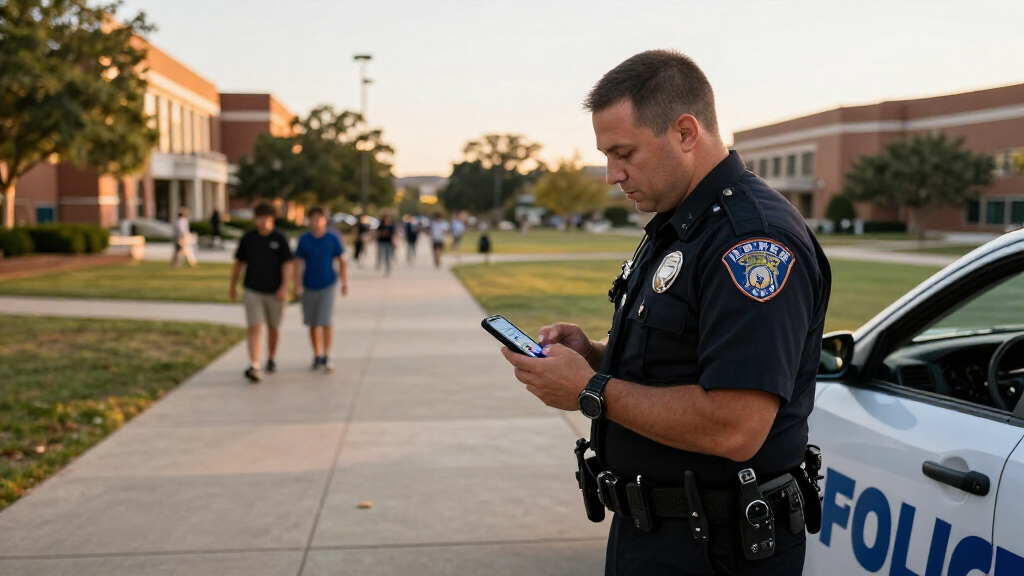
The supplied brief describes the Speedway activity at the University of Texas at Austin as a medical emergency response and attributes that confirmation to UT Austin police. It does not include a police statement, incident date, or details about who was involved, so those particulars remain unverified here.
A brief about activity on Speedway at the University of Texas at Austin says UT Austin police confirmed it was a medical emergency response, rather than providing evidence of another type of incident. The brief does not include the department’s statement or identify when the response occurred, leaving the circumstances and outcome unconfirmed in the information available here.
The item is framed around a report attributed to KEYE: police identified the Speedway activity as a medical emergency response. No direct quotation from UT Austin police, incident report, or link to the broadcast or report is included in the supplied material. The police characterization is therefore presented here as an attributed claim, not independently documented detail.
The available information does not specify the date or time, the location on Speedway beyond the street name, the number of people involved, or whether anyone was transported for care. It also does not describe any threat, closure, or continuing police activity. Those details should not be inferred from the description of a medical response.
The item appears in a business-opportunity brief proposing a monitor for consumer-health and safety developments. That brief assigns the item a signal score of 88/100, but gives no scoring method, comparison group, or time window. The score is a feature of the monitoring proposal, not a measure of the emergency’s severity or public-safety impact.
What UT Austin Police Confirmed About the Speedway Activity
The supplied brief says UT Austin police characterized the Speedway activity as a medical emergency response. It provides no direct police statement or incident details, so the account remains limited.
What the brief says
The police characterization is reported secondhand; the supplied material includes no department statement to verify its wording.
Medical response
The brief attributes this characterization to UT Austin police.
Incident particulars
No date, time, medical circumstances, or outcome is provided.
What remains unknown
The available account does not establish the circumstances or any wider campus impact.
- When the response happened
- Who was involved or what care was provided
- Whether anyone was transported
- A continuing hazard or campus disruption
- An arrest, crime, or closure
- The emergency’s severity from the signal score
Keep the two claims separate
The monitoring proposal is not independent confirmation of the campus event.
The brief says police described the Speedway activity as a medical emergency response.
IdeaNavigator AI proposes a monitoring service and a test with five prospective users; no test results are reported.
What the Police Characterization Establishes
The distinction between a medical emergency response and other forms of police activity can help prevent speculation when a visible response draws attention. In this case, however, the available description provides only that basic characterization. It does not establish what happened medically, whether there was a safety hazard, or whether the event affected people beyond those directly involved.
For students, staff, and visitors, the immediate takeaway is limited: the brief says police described the activity as a medical response. Without a dated department notice or further reporting, readers cannot use it to determine whether there is any ongoing risk or whether campus operations were disrupted. The claim should not be expanded into a broader health or contamination alert; no such finding appears in the available details.
Products Worth Considering

Samsung Odyssey OLED G8 34-Inch Curved Ultra WQHD Gaming Monitor

DJI Mini 3 Drone with DJI RC Controller

LG 27GS60QC-B Ultragear 27-inch Curved Gaming Monitor (QHD, 180Hz, 1ms, 1000R)
As an affiliate, we earn on qualifying purchases.
How the Item Was Presented
The material presenting this item is not a full incident report. It is an IdeaNavigator AI business concept for a proposed monitoring service aimed at safety or compliance leads at consumer-health and food companies. It argues that relevant health and safety developments can be scattered across news, forums, and filings, and proposes filtering them into short briefs for particular professional roles.
As an example of the kind of item the proposed service might surface, it names the Speedway medical-response report and says a local feed rated it 88 out of 100. The material describes that score as a signal, but does not identify the feed, explain how the score was calculated, or provide a baseline. It also outlines a proposed test: hand-delivering the brief and two other findings to five potential users and observing whether they change a decision or share an item. That is a suggested validation plan, not evidence that the service has been tested or adopted.
These distinctions matter because the business proposal and the reported campus event are separate things. The proposal offers a possible way to organize news; it does not independently verify the incident or add details about the police response.
Incident Details Still Missing
The available material does not provide a dated statement from UT Austin police or a direct link to the KEYE report. It is not possible from the brief alone to confirm the exact wording used by police, when the response happened, or whether additional information has since been released.
There is also no information about the person or people who prompted the response, the nature of the medical issue, any treatment or transport, or the response’s duration. No cause, diagnosis, or outcome is stated. The material does not report an arrest, a crime, a campus closure, or a continuing hazard; it also does not establish that none occurred. Readers should treat those points as unknown rather than assume an answer.
The 88/100 rating likewise cannot be interpreted as an incident-risk score. The scoring criteria and underlying data are not described, and the figure should not be read as a probability, severity measure, or quantified increase in activity.
Awaiting a Dated Police Update
The next useful confirmation would be a dated UT Austin Police Department notice or a report from KEYE that sets out when the response occurred and what officials have disclosed. Any further account should distinguish the department’s confirmed information from details that have not been released, particularly about the medical circumstances and outcome.
Until such information is available, the defensible account remains narrow: the brief says police characterized the Speedway activity as a medical emergency response. No further incident details or operational impact can be established from the material provided. Separately, IdeaNavigator AI proposes testing its monitoring concept with five prospective users; the brief reports no completed test or results.
Source: IdeaNavigator AI
Key Questions
What did UT Austin police reportedly confirm?
The brief says police characterized the Speedway activity as a medical emergency response. It does not provide the department’s statement, so that wording cannot be checked against a direct police account here.
When did the Speedway response happen?
The available brief gives no date or time for the response. It also does not say whether the incident is ongoing.
Was anyone injured or taken to a hospital?
The material does not say whether anyone was injured, received treatment, or was transported. The person’s condition and outcome are not provided.
Does the 88/100 score describe the emergency’s severity?
No such meaning is established. The score is presented as a signal rating in a proposed monitoring concept; its method and comparison basis are not explained.
Is the information enough to establish an ongoing campus safety risk?
No. The brief reports a medical-response characterization but gives no details about a continuing hazard or campus disruption. A dated police update or fuller report would be needed to clarify the situation.
Source: IdeaNavigator AI