
🔍 Read the full analysis: 10 Mobile Workstation Laptops For Professional AI Development on ThorstenMeyerAI.com

Get business pricing on tech for your team
- Business-only prices and quantity discounts
- Tax-exempt purchasing
- Multiple users, one account, clear invoices
TL;DR
The ThorstenMeyerAI.com guide compares 10 mobile workstation models for professional AI development and related engineering and creative workloads, emphasizing sustained performance, cooling and professional graphics. The supplied guide does not provide a complete set of configurations, prices, benchmark results or citations for every model, so its picks should be treated as recommendations rather than independently verified rankings.
A buyer’s guide from ThorstenMeyerAI.com names 10 mobile workstation laptops for professional AI development and related workloads, highlighting the ThinkPad P1 Gen 7 as its best overall choice, the ThinkPad P14s Gen 7 for compact use and the Dell Precision 7680 for sustained heavy workloads, as detailed in the original analysis. The guide frames its recommendations around a practical tradeoff for developers and other professionals: portability and battery life versus cooling capacity and performance over long sessions.
The ThorstenMeyerAI.com guide’s central advice is to judge workstations by how they perform under sustained load, not only by brief benchmark bursts. It says thicker systems, including the Precision 7680, can have more thermal headroom for engineering tasks, while thinner laptops may reduce clock speeds sooner when rendering, compiling or running other demanding jobs. The supplied source does not give comparable long-duration test results to quantify those differences.
For smaller systems, the guide points to the 14-inch ThinkPad P14s Gen 7 and its AMD Ryzen AI processor, alongside other AI-optimized mobile workstation laptops. For creative professionals, it calls out the ThinkPad P16s Gen 4 and its OLED display, while warning that OLED can use more power than IPS. The guide also says professional NVIDIA RTX drivers may benefit certified applications, but users should check compatibility with the software and version they actually run.
The supplied ThorstenMeyerAI.com material names seven other models in its 10-laptop roundup: the Lenovo ThinkPad P16s Gen 4, Dell Precision 7680, Dell Precision 5690, HP ZBook Fury 16 G11, HP ZBook Studio 16 G11, ASUS ProArt Studiobook 16 OLED, and MSI WS76, including options featured among 17-inch workstation laptops. It does not provide full specifications, pricing, configuration details or distinct assessments for all 10 entries, limiting how precisely readers can compare them.
The 10 picks
- 1
 Dell Precision 7680 16-Inch Workstation Laptop, Intel Core i7-13850HX, NVIDIA…View on Amazon →
- 2
 Dell Precision 7680 Laptop, NVIDIA RTX 2000 Ada 8GB, Intel i7-13850HX, 32GB DDR5View on Amazon →
- 3
 Lenovo ThinkPad P1 Gen 7, w/ Ultra 7, NVIDIA RTX 3000, 16" 2.8K, 32GB RAMView on Amazon →
- 4
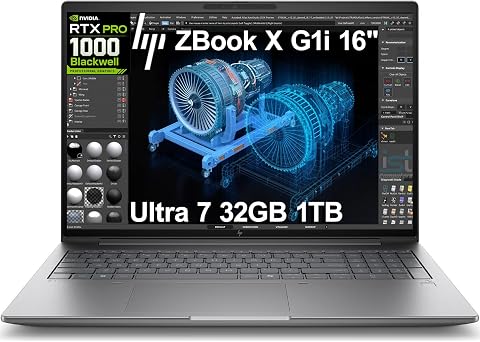 HP ZBook X G1i 16-inch Laptop, Intel Core Ultra 7 265H, NVIDIA RTX PRO 1000 B…View on Amazon →
- 5
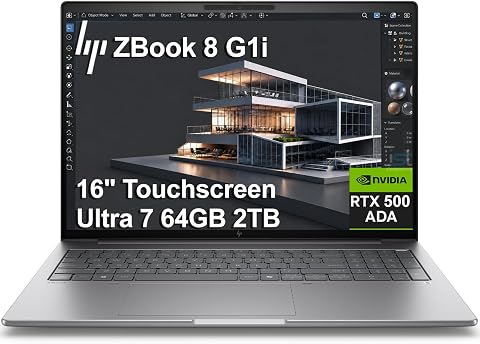 HP ZBook 8 G1i AI Mobile Workstation Laptop (16" FHD+ Touchscreen, Intel Ultr…View on Amazon →
- 6
 HP ZBook 8 G1i AI Mobile Workstation Laptop (16" 4K 120Hz, Intel Ultra 7 265H…View on Amazon →
- 7
 Lenovo ThinkPad P16s Gen 4 16-inch OLED Touchscreen Mobile WorkstationView on Amazon →
- 8
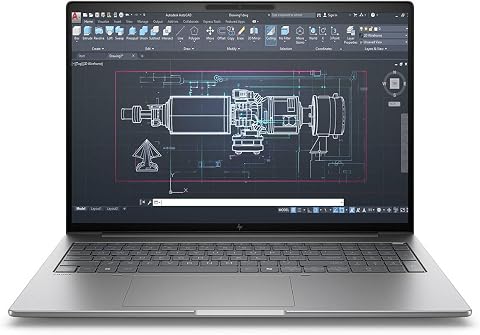 HP ZBook 8 G1i 16" Mobile Workstation – WUXGA – 60 Hz – Intel Core Ultra 7 25…View on Amazon →
- 9
 Lenovo ThinkPad P16s Gen 4 16-Inch Business LaptopView on Amazon →
- 10
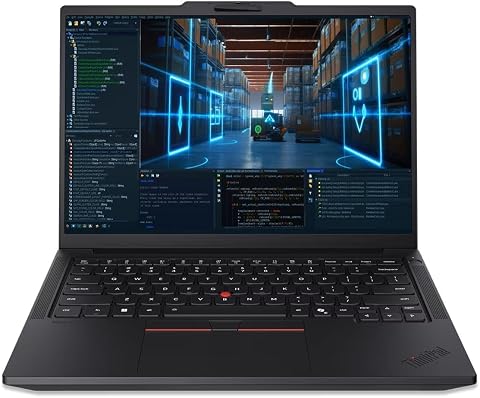 Lenovo ThinkPad P14s Gen 7 Mobile Workstation (2026) – 14" Touch, AMD Ryzen A…View on Amazon →
Cooling Shapes AI Workloads
The ThorstenMeyerAI.com guide notes that mobile AI development can involve very different demands: writing and testing code, running local inference, processing data, or training models. A laptop recommendation is useful only when matched to that workload. Systems with more cooling capacity may be better suited to long computation-heavy tasks, while lighter models can be easier to carry but may not sustain peak performance for as long.
The guide also highlights a purchasing issue that can be overlooked in processor and GPU comparisons: professional software compatibility. Certified drivers can matter in some CAD, simulation and design applications, but they are not automatically necessary for every developer. Readers should verify their software requirements and evaluate memory, GPU capacity, ports and upgrade options before treating a model as suitable for AI work.
Products Worth Considering

Sony WH-1000XM5 Premium Noise Cancelling Wireless Headphones – Midnight Blue

LG UltraGear 32GX850A-B 32-inch 4K UHD OLED Gaming Monitor

Apple MacBook Air 13.6-inch Laptop with M5 Chip, 16GB Memory, 512GB SSD, Midnight
As an affiliate, we earn on qualifying purchases.
How the Guide Judges Laptops
ThorstenMeyerAI.com says its guide weighs sustained performance, thermal behavior, build quality and serviceability, as well as keyboard, webcam and software compatibility. That is a broader measure than peak specifications alone, particularly for teams that expect laptops to handle long jobs or remain in service for years.
The guide also describes a wider hardware shift toward Intel Core Ultra and AMD Ryzen AI chips, which it says can improve efficiency while not necessarily matching older HX-series processors in peak multi-core performance. These are general observations in the guide, not results from a disclosed test suite. The supplied source provides no dated methodology, standardized benchmarks or cited product testing to independently establish its rankings.
Evidence Behind the Rankings
The supplied ThorstenMeyerAI.com material does not include prices, exact configurations, benchmark tables or test conditions for the 10 named laptops. It also does not specify which configurations of each model were compared, or document performance after a fixed period of sustained workload. Those omissions make it difficult to validate the rankings or determine how they apply to a particular purchase.
Several recommendations depend on components that can vary by configuration, including processors, GPUs, displays and memory. The guide’s claims about thermal behavior, driver stability and battery efficiency should be read as publisher guidance, not as findings supported here by independently cited tests. Actual suitability for AI development also depends on the software, model size and whether computation will run locally or remotely.
Check Configurations Before Buying
Readers comparing the ThorstenMeyerAI.com picks should confirm the exact processor, GPU, memory, storage, display and port selection available in their region. They should also look for independent sustained-load testing and check the current certification list for their professional applications. The source does not announce a follow-up test or provide a date for updated recommendations, so pricing and availability need to be checked with manufacturers or retailers.
Key Questions
Which laptop does the guide name as its best overall pick?
The ThorstenMeyerAI.com guide names the Lenovo ThinkPad P1 Gen 7, citing its relatively sleek design and dedicated NVIDIA RTX graphics. The supplied source does not provide comparative benchmark data for that ranking.
Which pick is aimed at buyers who want a smaller workstation?
The guide points to the Lenovo ThinkPad P14s Gen 7, a 14-inch model it describes as using an AMD Ryzen AI processor. Available configurations may vary.
Which model is recommended for heavier sustained workloads?
The guide highlights the Dell Precision 7680 for engineering work that may benefit from greater thermal headroom. It does not provide a standardized test showing how much longer the laptop sustains performance.
Does the source provide a verified AI performance ranking?
No. The ThorstenMeyerAI.com guide offers recommendations and selection criteria, but the supplied material includes no benchmark table, test protocol or configuration-by-configuration results for AI workloads.
Source: ThorstenMeyerAI.com