📊 Full opportunity report: How To Use Round Scores In Home Boxing Training on IdeaNavigator AI — validation score, market gap, and execution plan.

Get business pricing on tech for your team
- Business-only prices and quantity discounts
- Tax-exempt purchasing
- Multiple users, one account, clear invoices
TL;DR
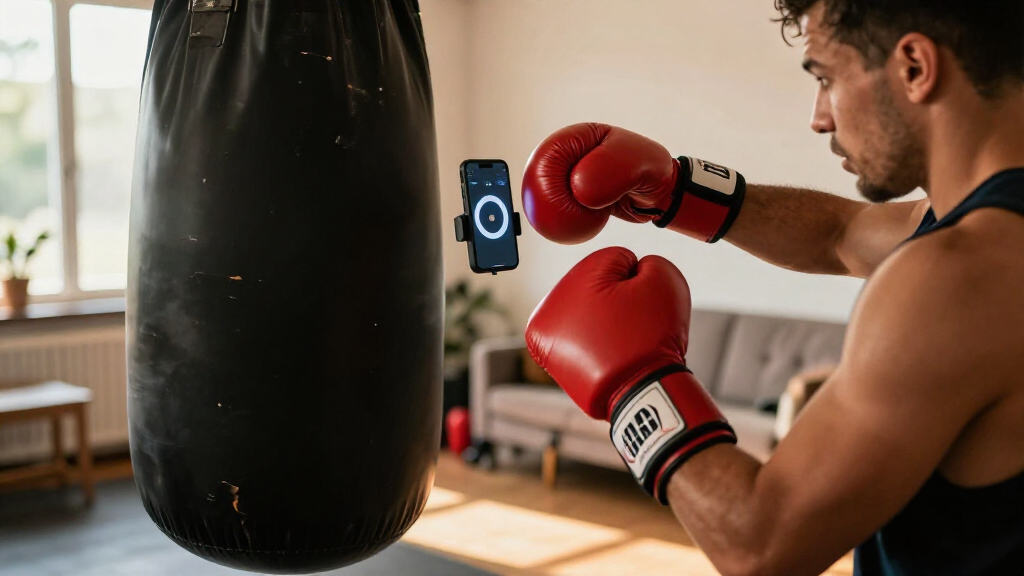
IdeaNavigator AI has proposed a home boxing app that scores shadowboxing rounds using phone-camera tracking, including punch counts, speed and guard position. The concept is a product proposal, not evidence of a launched app or validated results; retention and paid-tier interest would need testing.
IdeaNavigator AI has outlined a proposed app that would score shadowboxing rounds for people training at home, using a phone camera to track punch types, speed and guard position. The concept targets boxers without a coach or gym, but it remains a product opportunity rather than a confirmed launch: the proposal provides no evidence of a working app, technical results or user-retention data.
According to IdeaNavigator AI’s proposal, users would prop up a phone, follow a round or coached combination, and receive feedback such as punch counts by type, speed estimates and instances of a dropped guard. The concept would also track benchmarks across sessions so users could compare their own performance over time. The proposal does not specify which punches would be recognized, how scoring would work, or how reliably the camera could assess technique.
IdeaNavigator AI describes the product as addressing a reported gap in solo shadowboxing: without a coach, gym partner or equipment, users may have little immediate feedback on their workouts or progress. The proposed business model is a free tier for scored rounds and a paid subscription for coached combinations. The proposal gives no price or subscription terms and reports no completed market test.
The proposal’s suggested validation plan is to soft-launch scored rounds, compare week-four retention with fitness-app benchmarks, and test whether users pay for the coached-combination tier. These are proposed future tests, not reported findings. The source provides no benchmark figures, participant numbers or conversion results.
Feedback for Solo Boxing Rounds
IdeaNavigator AI’s proposal focuses on training without supervision: a home boxer may complete rounds but have limited ways to check punch volume, guard habits or changes over time. The proposal suggests that, if the tracking proves dependable, round scores could provide feedback without a wearable or dedicated boxing hardware.
The proposal does not provide testing on the limits of that approach. Scores would measure selected movements, not provide coaching; counting punches or detecting a guard drop would not establish whether a movement is safe or technically sound. The proposal presents no evidence that phone-camera analysis can assess form across different rooms, camera angles, lighting conditions, body types or boxing styles. The accuracy and scope of any scores would need to be tested and explained.
The proposal also provides no retention or payment evidence. Week-four use and conversion to coached combinations are among the measures IdeaNavigator AI suggests testing to assess whether users continue using the feedback or pay for the additional feature.
As an affiliate, we earn on qualifying purchases.
From Shadowboxing to Scored Sessions
IdeaNavigator AI places the concept in the home fitness and combat-sports app market, proposing guided sessions divided into rounds, with performance feedback during or after each one. Its suggested differentiator is using a phone camera rather than requiring wearable sensors or other boxing equipment. This is a premise of the proposal, not evidence of how consistently current phone tracking can measure movement in real home conditions.
The proposal defines an initial audience as home boxers without a coach or gym, rather than users of a broad training platform. Its proposed minimum viable product combines round scoring, punch-type counts, speed signals, guard-position feedback, guided combinations and session-to-session benchmarks. The source does not establish whether those features can all be delivered accurately from one phone camera or whether they would be included in an initial release.
Accuracy and Demand Still Untested
IdeaNavigator AI’s proposal does not identify a finished product, development team, launch schedule or technical evaluation. It gives no measurement method for punch speed, no definition of a guard drop and no accuracy results for classifying punches. It is also unclear whether feedback would appear live during a round or be limited to a post-round score in every use case.
Demand remains unverified, too. The proposal reports no user interviews, trial results, retention figures, subscription prices or conversion rates. Its suggested comparison with fitness-app retention benchmarks does not name a benchmark or explain which apps would be comparable. Until those tests are conducted, claims about sustained motivation or commercial viability remain hypotheses.
Test Rounds Before Subscriptions
IdeaNavigator AI proposes a soft launch of scored rounds, followed by measuring how many users return in week four. The proposal also suggests testing whether people who try the basic scoring feature convert to a paid coached-combination tier. It gives no dates and does not say that either test is underway.
Further evaluation would need to report what the camera can and cannot measure, how results vary across common home setups, and how users interpret the scores. Until a product and results are announced, the source describes a proposed workflow and validation plan, not a confirmed training service.
Source: IdeaNavigator AI
Key Questions
Is the scored shadowboxing app available now?
No availability is confirmed. IdeaNavigator AI describes a product proposal and provides no launch date or confirmation that an app has been released.
What would the app measure?
IdeaNavigator AI’s proposal includes punch counts by type, speed signals and guard position, alongside coached combinations and benchmarks across training sessions. It does not report the measurement methods or their accuracy.
Would users need boxing wearables?
The proposal envisions users placing a phone camera to track a round, without wearables or dedicated hardware. The source provides no test results showing whether phone-only tracking performs reliably in home settings.
How might the app make money?
IdeaNavigator AI proposes a free scored-round tier with a paid subscription for coached combinations. The proposal gives no price or evidence of subscription demand.
How would the idea be tested?
The proposal suggests soft-launching scored rounds, measuring week-four retention against fitness-app benchmarks, and assessing conversion to the coached-combination tier. It reports no test results or schedule.
Source: IdeaNavigator AI
Fall Picks
fall essentials
As an affiliate, we earn on qualifying purchases.