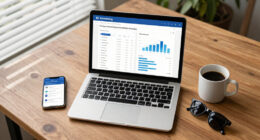
📊 Full opportunity report: Remote And Hybrid Teams: Strength Tests For Enhanced Wellness on IdeaNavigator AI — validation score, market gap, and execution plan.
Open a free Amazon Business account
Business pricing, bulk buying and tax-exempt orders.
Create a free accountAs an affiliate, we earn on qualifying purchases.
TL;DR

Employers and benefits providers are testing remote strength and mobility assessments to identify early musculoskeletal risks among hybrid and remote workers. These tools use phone cameras and pose estimation to deliver personalized risk scores and preventive routines. Pilot programs are underway to validate effectiveness and engagement.
Remote and hybrid teams are now being evaluated through new strength and mobility assessments designed to catch early signs of musculoskeletal decline. This development aims to provide employers with a preventive tool to address rising MSK issues linked to sedentary remote work, which could reduce costly medical claims and lost workdays.
Remote work has led to increased sedentary behavior, resulting in a surge of neck, back, and posture-related musculoskeletal (MSK) problems among employees. Employers report rising medical claims and absenteeism but lack lightweight, proactive screening methods to detect early MSK decline before it becomes a clinical issue.
Recent advances in smartphone camera-based motion capture and pose estimation technology have matured sufficiently to enable self-administered assessments. These assessments guide employees through a series of strength, mobility, and posture tests—such as sit-to-stand repetitions, shoulder and hip range-of-motion, and plank holds—using their phone cameras to generate movement quality scores.
Initial pilot programs are planned with one or two employers, aiming to validate the accuracy of the camera-derived MSK risk scores against clinical assessments, as well as employee engagement and completion rates. The assessments will produce personalized risk scores, corrective routines, and progress tracking, with aggregate dashboards for employers to monitor team-level trends.
Revenue models include B2B SaaS subscriptions per employee per month, with optional outcome-based pricing and referral fees from clinical partners. The goal is to embed preventive MSK screening into existing employee wellness programs, especially for self-insured firms concerned with rising healthcare costs.
Implications for Employee Health and Employer Costs
This initiative could transform how companies address musculoskeletal health in remote workforces by shifting from reactive treatment to preventive screening. Early detection of MSK decline allows for targeted interventions, potentially reducing healthcare expenses, lowering absenteeism, and improving overall employee wellness. As remote and hybrid work models become permanent for many organizations, scalable, non-intrusive screening tools like these could become standard components of corporate benefits programs, aligning health outcomes with business interests.
smartphone camera pose estimation app
As an affiliate, we earn on qualifying purchases.
As an affiliate, we earn on qualifying purchases.
Remote Work and MSK Health Challenges
The shift to remote and hybrid work arrangements has eliminated incidental movement associated with commuting and office ergonomics. This change has contributed to a rise in sedentary behavior, which is linked to increased MSK problems. Data indicates that MSK issues are already a leading driver of employer healthcare costs, with musculoskeletal claims rising in tandem with remote work adoption. Traditional solutions often react after employees experience pain or injury, but recent technological advances are enabling proactive, at-home assessments.
Historically, early detection of MSK decline relied on clinical visits or self-report questionnaires, which are often reactive and infrequent. The emergence of smartphone-based pose estimation offers a new paradigm: scalable, privacy-safe, self-guided assessments that can be deployed remotely, providing real-time risk scores and personalized routines.
Several startups and health tech companies are exploring these solutions, with pilot programs expected to validate their efficacy and integration into existing wellness strategies. This approach aligns with broader trends toward digital health and preventive care, especially as employers seek ways to control rising healthcare costs associated with sedentary lifestyles.
Uncertainties Around Effectiveness and Adoption
It remains unclear how accurately the camera-based assessments will correlate with clinical evaluations of MSK risk, and whether employees will consistently complete the assessments over time. Validation studies are ongoing, and results are expected within the next 6 months. Additionally, employer willingness to adopt new screening routines and integrate them into existing benefits programs is still being tested, with pilot programs in early stages.
Next Steps for Validation and Deployment
Pilot programs with selected employers will measure assessment completion rates, engagement, and the correlation of camera-derived scores with clinical benchmarks. If successful, broader rollout could follow within 12 months, alongside further validation studies. Companies will also evaluate the integration of these tools with clinical MSK providers and the development of scalable dashboards for team-level health monitoring.
Key Questions
How accurate are the remote MSK assessments compared to clinical evaluations?
The assessments aim to produce scores that correlate with clinical measures, but validation is ongoing. Early results from pilot studies will clarify their accuracy within the next few months.
Will employees need special equipment to perform these tests?
No, the assessments are designed to be completed using only a smartphone camera, without sensors or additional hardware.
How will data privacy be protected in these assessments?
The assessments are being developed with privacy in mind, using secure, anonymized data collection and storage, with strict compliance to data protection standards.
When can employers expect these tools to be widely available?
If pilot programs validate the approach, a broader market deployment could occur within 12 to 18 months.
What are the benefits for employers adopting these assessments?
Early detection of MSK risks can reduce healthcare costs, improve employee well-being, and decrease absenteeism related to musculoskeletal issues.
Source: IdeaNavigator AI
Evergreen bestsellers Picks
bestsellers
As an affiliate, we earn on qualifying purchases.