📊 Full opportunity report: Enhance Employee Safety And Skills With Factory VR Training Tools on IdeaNavigator AI — validation score, market gap, and execution plan.
TL;DR
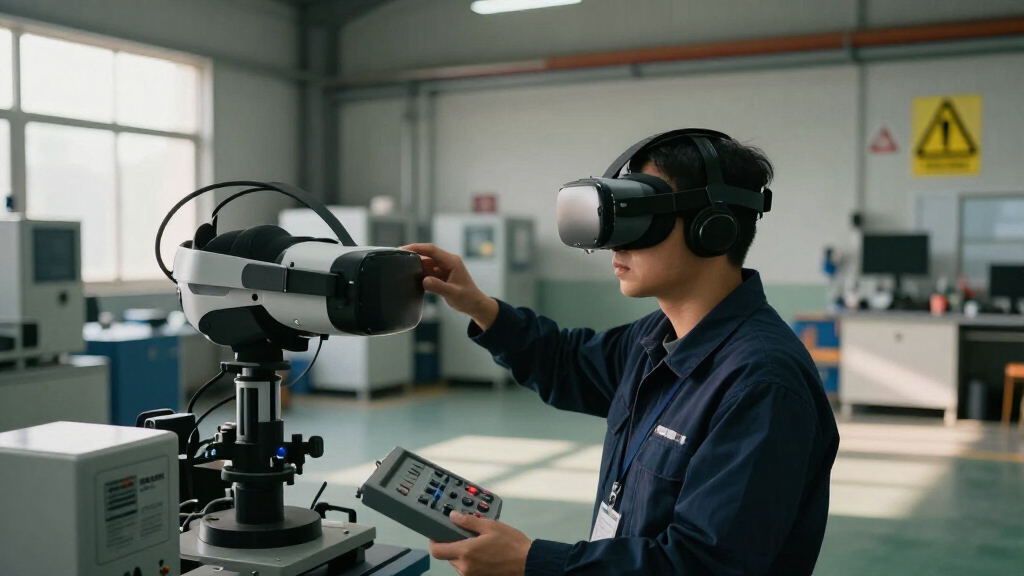
Manufacturers are piloting virtual reality training modules to address labor shortages and improve safety. The focus is on using standalone VR headsets for high-risk procedures, with early results measuring time-to-competency and hazard recognition.
Manufacturers are testing a new factory VR training platform designed to improve onboarding efficiency and safety compliance. This initiative targets mid-to-large manufacturing companies seeking scalable, standardized training solutions amid a persistent labor shortage and skills gap. The pilot involves deploying standalone VR headsets with focused modules on high-risk procedures, such as lockout/tagout or forklift safety, with real-time tracking and assessment tools.
The VR training platform, developed specifically for manufacturing environments, is currently in a pilot phase with plans to evaluate its effectiveness over 60 to 90 days. It uses cloud-based dashboards to monitor completion rates, hazard recognition accuracy, and quiz scores for individual workers, enabling managers to assess readiness and identify areas for improvement. The initial focus is on delivering targeted modules via affordable standalone headsets like Meta Quest and Pico, eliminating the need for costly hardware investments.
This approach aims to address key issues faced by manufacturers: slow traditional training methods, inconsistent knowledge retention, and safety risks associated with live equipment. By providing immersive, repeatable scenarios, the VR modules can accelerate the learning curve and improve hazard awareness. Early feedback from participating plants suggests potential for faster onboarding and higher hazard recognition scores compared to conventional classroom training, although comprehensive data is still being gathered.
Potential Impact on Manufacturing Safety and Efficiency
This initiative could significantly transform workforce training in manufacturing by enabling faster, safer onboarding processes that reduce incident rates and operational downtime. The ability to standardize training across multiple plants and ensure consistent knowledge retention addresses longstanding industry challenges. As the market for immersive enterprise training grows, successful pilot results could accelerate adoption, especially given the current labor shortages and the need for rapid onboarding of new workers.
Furthermore, integrating VR training with cloud tracking offers measurable insights into worker competency, facilitating targeted coaching and continuous improvement. If proven effective, this could lead to widespread adoption and a shift toward more digital, scalable training models in industrial settings, ultimately enhancing overall safety culture and operational productivity.
standalone VR headset for industrial training
As an affiliate, we earn on qualifying purchases.
As an affiliate, we earn on qualifying purchases.
Manufacturing Workforce Challenges Drive VR Adoption
The U.S. manufacturing sector faces a critical labor shortage, with approximately 409,000 unfilled positions as of August 2025, and projections suggest a need for 3.8 million new workers by 2033. Traditional training methods, which rely on classroom instruction and on-the-floor demonstrations, are increasingly inadequate to meet the scale and speed required for onboarding new hires quickly and safely.
Advances in affordable, cloud-connected VR hardware—such as Meta Quest and Pico headsets—have lowered the barriers to deploying immersive training at scale. Simultaneously, the immersive enterprise training market is growing at an estimated CAGR of about 20%, reflecting rising industry interest in digital solutions for skills development and safety compliance. Early pilots focus on high-risk procedures like lockout/tagout and forklift safety, areas where errors can lead to serious incidents or costly downtime.
Manufacturers are exploring VR as a way to standardize training, improve retention, and reduce safety incidents, with initial trials indicating promising improvements over traditional methods. However, the long-term effectiveness and scalability of these solutions remain under evaluation.
“The use of standalone VR headsets for targeted safety training could be a game-changer in how manufacturers onboard and protect their workers.”
— an anonymous researcher
What Data Will Confirm VR Training Effectiveness?
It is not yet clear whether the pilot programs will demonstrate statistically significant improvements in onboarding speed, hazard recognition, or incident reduction. Data collection is ongoing, and results from the 60-90 day trials are expected in the coming months. Additionally, questions remain about the scalability of the platform across diverse manufacturing environments and procedures, and whether cost savings will outweigh implementation challenges.
Next Steps for Pilot Expansion and Validation
Manufacturers will continue pilot testing, measuring key performance indicators such as time-to-competency, hazard recognition accuracy, and supervisor-rated readiness. Success in these metrics could lead to broader deployment and commercial availability of the VR platform. Industry stakeholders will watch for data confirming whether immersive training can reliably reduce safety incidents and speed onboarding at scale, potentially influencing future standards in industrial workforce development.
Key Questions
How does the VR training platform work?
The platform uses standalone VR headsets to deliver focused safety modules, with a cloud dashboard tracking completion, hazard recognition, and quiz scores for each worker, enabling real-time assessment and coaching.
What procedures are covered in the initial VR modules?
Initial modules focus on high-risk procedures such as lockout/tagout and forklift safety, which are critical for preventing accidents and ensuring compliance.
How soon could this technology be widely adopted?
If pilot results are positive, manufacturers could start expanding deployment within 6 to 12 months, depending on the success of initial trials and integration challenges.
What are the main benefits of VR training over traditional methods?
VR offers immersive, repeatable scenarios that improve knowledge retention, standardize training across multiple sites, and enable measurable performance tracking.
Are there any risks or downsides to using VR for training?
Potential challenges include hardware costs, user acceptance, and ensuring that virtual scenarios accurately reflect real-world conditions, but these are being addressed in pilot programs.
Source: IdeaNavigator AI