
Hot water mop washing cleans more effectively and quickly, breaking down dirt and bacteria with higher temperatures. It often reduces the need for multiple washes, saving time and effort. Cold water docks use less energy and chemicals, making them more eco-friendly, but may require more frequent cleaning to achieve similar results. If you want to discover which method suits your needs best and see the effects fast, keep exploring the details below.
Key Takeaways
- Hot water cleans more effectively and quickly, reducing the need for multiple washes compared to cold water docks.
- Cold water docks save energy and are more eco-friendly but may require more frequent cleaning for similar results.
- Hot water’s higher temperature enhances detergent performance, showing faster visible cleanliness.
- Cold water methods are cost-effective initially and produce less environmental pollution.
- The difference in cleaning speed and effectiveness becomes apparent immediately, influencing choice based on urgency and sustainability.
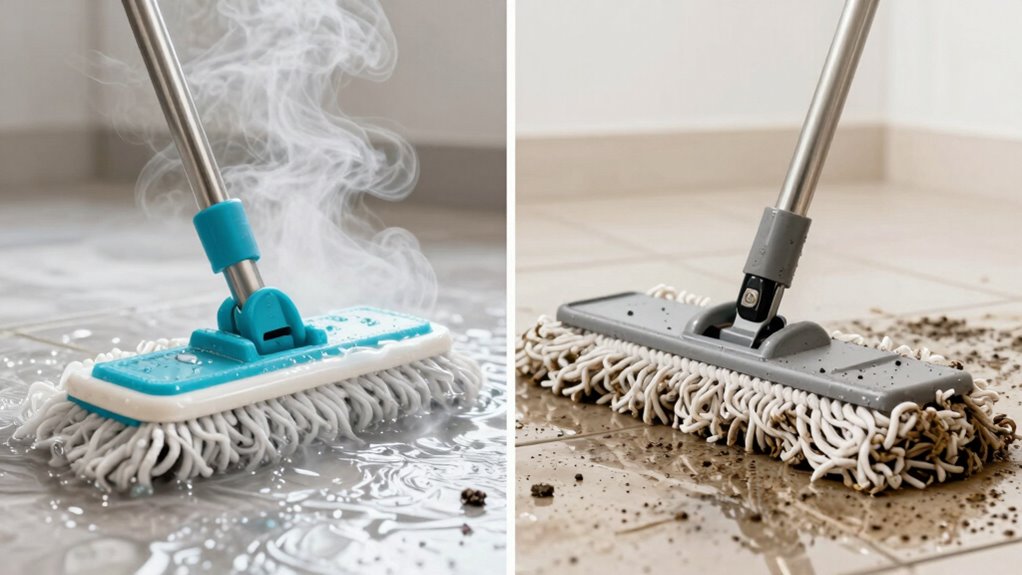
When it comes to cleaning your floors, choosing between hot water mop washing and cold water docks can considerably impact the results. The decision isn’t just about cleanliness; it also influences the environmental impact and cost efficiency of your cleaning routine. Hot water mop washing uses higher temperatures to break down dirt and grime more effectively, which can lead to cleaner floors in less time. This method often requires less cleaning product because hot water enhances the effectiveness of detergents, reducing the need for multiple washes. As a result, you might save money on cleaning supplies over the long run. On the other hand, cold water docks rely on lower temperatures, which can be cheaper initially because they don’t demand the same energy input for heating. However, they may require more frequent or more thorough cleanings, potentially increasing water and product use, which can offset the initial cost savings.
Choosing between hot water and cold water cleaning impacts cleanliness, cost, and environmental footprint.
From an environmental perspective, hot water mop washing has both pros and cons. While it can be more effective at eliminating bacteria and germs, it consumes more energy to heat the water, contributing to a higher carbon footprint. If you’re environmentally conscious, you might consider balancing the benefits of hot water against its energy consumption. Cold water docks, by contrast, are more eco-friendly in that they use less energy, reducing your household’s overall carbon footprint. They also tend to use fewer chemicals, which can lessen water pollution and environmental harm. But, because cold water may not always do as thorough a job, you might need to perform additional cleaning, which could involve more water and cleaning products, somewhat negating the environmental benefits. Interestingly, energy-efficient cleaning methods are advancing and can help mitigate some of the environmental impacts associated with hot water cleaning, making it a more sustainable option. Incorporating sustainable cleaning techniques can further enhance the eco-friendliness of either method.
In terms of cost efficiency, hot water mop washing tends to be more economical over time because it often delivers better results faster, reducing the need for repeated cleaning. The initial investment in a good mop and heating system might be higher, but the savings come through less product use and time spent cleaning. Cold water docks are less expensive upfront and require minimal energy, making them appealing if your budget is tight. Still, if they don’t clean as effectively, you could end up spending more on additional products or cleaning sessions, which could cancel out the initial savings. Moreover, long-term savings can be significant if you choose the right method based on your specific cleaning needs.
Ultimately, your choice hinges on what matters most to you—whether it’s the environmental impact, cost efficiency, or cleaning effectiveness. Both methods show their strengths and weaknesses quickly, so weigh these factors carefully before deciding which approach aligns best with your cleaning needs and values.
hot water mop for deep cleaning
As an affiliate, we earn on qualifying purchases.
As an affiliate, we earn on qualifying purchases.
Frequently Asked Questions
Which Method Is More Environmentally Friendly?
Hot water mop washing is generally more eco-friendly because it often requires less cleaning product, reducing chemical use. Cold water docks save energy by not heating water, making them better for water conservation and lowering your carbon footprint. If you’re aiming for eco-friendly cleaning, consider cold water methods to conserve water and energy, but guarantee effective dirt removal. Both methods have their benefits, so choose based on your cleaning needs.
Can Hot Water Damage Delicate Flooring?
Think of your delicate flooring as a fragile flower in a gentle breeze. Hot water can sometimes act like a harsh wind, risking damage and surface sensitivity. It may cause warping or discoloration if your floor’s material isn’t resilient. For gentle cleaning, especially on sensitive surfaces, cold water is your safest choice, providing effective cleaning without the risk of harm. Always consider your floor’s material before choosing the temperature.
How Often Should Each Method Be Used?
You should use hot water mop washing weekly for regular cleaning, especially on high-traffic floors, to effectively remove grime. Cold water docks can be incorporated into your dock cleaning schedule monthly or as needed, depending on dirt buildup. Adjust mop frequency based on your environment’s dirt levels and foot traffic. Regularly switching between hot and cold water methods guarantees your floors stay cleaner longer without damage.
Is There a Safety Risk With Hot Water?
Hot water hazards can pose safety risks, especially if you’re not careful. For example, a worker who didn’t wear gloves might get burns from splashes. To avoid accidents, always follow safety precautions like wearing protective gear and handling hot water carefully. While hot water cleans better, ignoring safety precautions increases risk. Stay alert, use proper equipment, and make certain hot water is used safely to prevent injuries.
Do Cleaning Solutions Work Better With Hot or Cold Water?
Cleaning solutions generally work better with hot water because it enhances cleaning effectiveness by breaking down grease and grime more efficiently. However, you should consider surface compatibility, as some delicate surfaces might be damaged by hot water. Always check the manufacturer’s recommendations. For tougher stains, hot water can be more effective, but for sensitive surfaces, cold water might be safer to avoid damage.
eco-friendly cold water floor mop
As an affiliate, we earn on qualifying purchases.
As an affiliate, we earn on qualifying purchases.
Conclusion
Choosing between hot water mop washing and cold water docks is like selecting a trusted companion for your cleaning journey. Hot water acts as the fiery warrior, conquering germs and grime with fiery passion, while cold water stands as the steady guardian, preserving delicate fibers. Your choice shapes the story of your floors—whether you seek fierce cleanliness or gentle care. In this dance of water and dirt, your decision becomes the brushstroke that defines your home’s cleanliness masterpiece.
electric floor steam mop
As an affiliate, we earn on qualifying purchases.
As an affiliate, we earn on qualifying purchases.
multi-surface cleaning mop
As an affiliate, we earn on qualifying purchases.
As an affiliate, we earn on qualifying purchases.