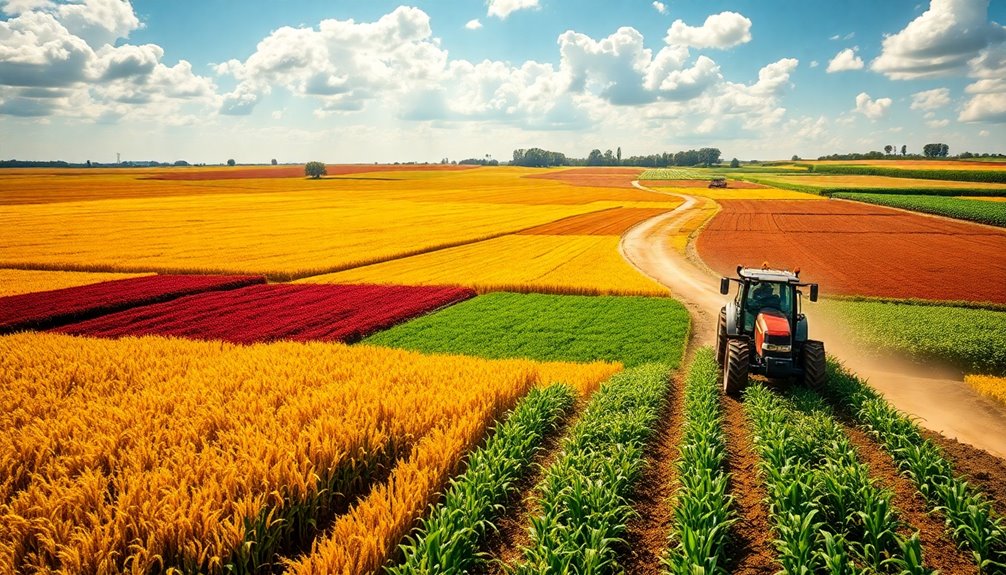

Agricultural yields are vital for feeding the world's growing population. Warmer temperatures can enhance crop growth, but extremes can hurt yields, like maize's decline. Proper plant and water management boosts productivity, while healthy soil leads to stronger crops. By leveraging data-driven practices, you can make informed decisions that improve yields. Understanding these factors is key to ensuring food security. Discover how mastering these elements can revolutionize agricultural outcomes and help sustain our future.
Key Takeaways
- Warmer temperatures can enhance crop growth, but extremes like heat can drastically reduce yields, particularly for sensitive crops like maize.
- Effective plant management, including proper spacing, maximizes photosynthesis and minimizes competition, leading to healthier crops.
- Water management is crucial; balancing water supply prevents drought stress and over-saturation, both of which can harm yields.
- Soil health, achieved through proper structure and nutrient balance, is essential for optimal root growth and crop performance.
- Utilizing data-driven agriculture allows farmers to make informed decisions, improving practices and ultimately boosting agricultural yields.
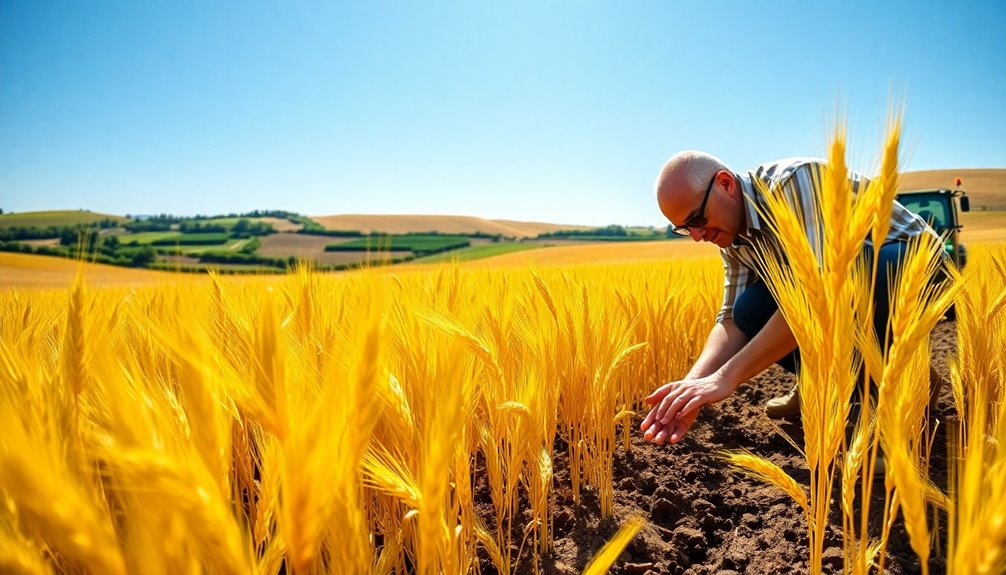
Agricultural yields are influenced by a variety of factors, making it essential for farmers to understand the dynamics at play. One of the most critical influences is climate and temperature. You'll find that warmer temperatures can maximize crop growth by promoting cell division and metabolism, while cold conditions can inhibit development.
For instance, soybeans thrive at around 77°F, but maize can suffer in extreme heat, especially in tropical regions. As temperatures rise, you might notice a potential 24% decline in maize yields by the end of the century, while some regions could see wheat yields increase by 17%. This variability means you need to adapt your practices based on your specific growing environment.
Plant management is another key factor that affects yields. Proper plant spacing can significantly enhance crop performance. By choosing wider spacing or reducing the number of plants in a given area, you minimize competition among plant roots and boost canopy growth. Wider plant spacing can also help you optimize photosynthesis and reduce weed pressure.
For example, planting soybeans in 15-inch or 30-inch rows can yield results comparable to drilled beans while promoting healthier plants. Additionally, managing water supply is crucial; both drought stress and excessive water can compromise yields. Some crops are bred for drought resistance, helping you better navigate challenges related to water scarcity.
Soil management also plays an essential role in determining crop yields. The structure and nutrient supply of your soil can either promote or hinder growth. Well-permeated soils facilitate optimal root growth and microbial activity, enabling plants to access nutrients more effectively.
However, poor soil structure and compaction can result from over-tilling, reducing both root growth and nutrient availability. Striking a balance between organic and inorganic nutrients is vital for maintaining soil health and optimizing yields.
Finally, data-driven agriculture is emerging as a game-changer in enhancing productivity. By collecting and analyzing data on environmental, biological, and human factors influencing crop growth, you can make informed decisions that lead to better outcomes.
This approach allows you to compare your practices with those of others and adjust accordingly, ultimately improving your yields.
Top picks for "agricultural yield secret"
As an affiliate, we earn on qualifying purchases.
Frequently Asked Questions
How Do Climate Changes Affect Agricultural Yields?
Climate change significantly impacts agricultural yields by altering temperature and rainfall patterns.
You'll notice that higher temperatures can reduce yields, especially in warmer regions, while increased CO2 levels might benefit certain crops like wheat.
However, extreme heat and water stress due to changing precipitation can lead to severe yield declines.
Adapting by using resilient crop varieties and improving irrigation can help you mitigate these challenges and sustain agricultural productivity.
What Role Do Genetically Modified Organisms Play in Yields?
Genetically modified organisms (GMOs) play a crucial role in increasing agricultural yields.
By adopting GM crops, you're likely to see a yield boost ranging from 6% to 25%. These crops are designed to be more resilient and efficient, enabling you to produce more with less input.
With reduced pesticide use and improved nutrient efficiency, you'll not only enhance your profits but also contribute to sustainable farming practices that benefit the environment.
How Can Technology Improve Farming Practices for Better Yields?
Technology can significantly enhance your farming practices and boost yields. By utilizing precision forecasting tools, you can make informed decisions based on weather predictions and soil analysis.
Implementing sensor technology allows you to monitor environmental factors and adjust your strategies accordingly. Automation, like drones and autonomous machinery, streamlines operations, reducing labor costs.
Finally, genomics and gene editing lead to resilient crop varieties, improving both productivity and sustainability on your farm.
What Are the Environmental Impacts of Increasing Agricultural Yields?
Increasing agricultural yields can lead to several environmental impacts you mightn't realize.
For instance, intensive farming contributes to soil erosion and land degradation, as farmers often clear more land to compensate for lower yields during droughts.
Additionally, agrochemicals used for better yields can pollute waterways, affecting water quality.
Lastly, higher crop outputs may increase greenhouse gas emissions, further exacerbating climate change effects.
Balancing productivity and environmental sustainability is crucial for long-term health.
How Do Government Policies Influence Agricultural Yield Outcomes?
Government policies significantly influence agricultural yield outcomes in various ways.
You'll find that land prices, commodity prices, and input costs are all affected by fiscal and tax policies. Regulations on fertilizers and pesticides can limit or enhance productivity, while safety nets like crop insurance offer financial stability.
Conclusion
In conclusion, boosting agricultural yields is crucial for feeding our growing population. By embracing innovative farming techniques, sustainable practices, and cutting-edge technology, you can help ensure food security for future generations. It's not just about increasing production; it's about creating resilient systems that protect our planet. Together, we can unlock the secrets to higher yields and a healthier world, empowering communities and nourishing those in need. The future of food depends on our actions today.