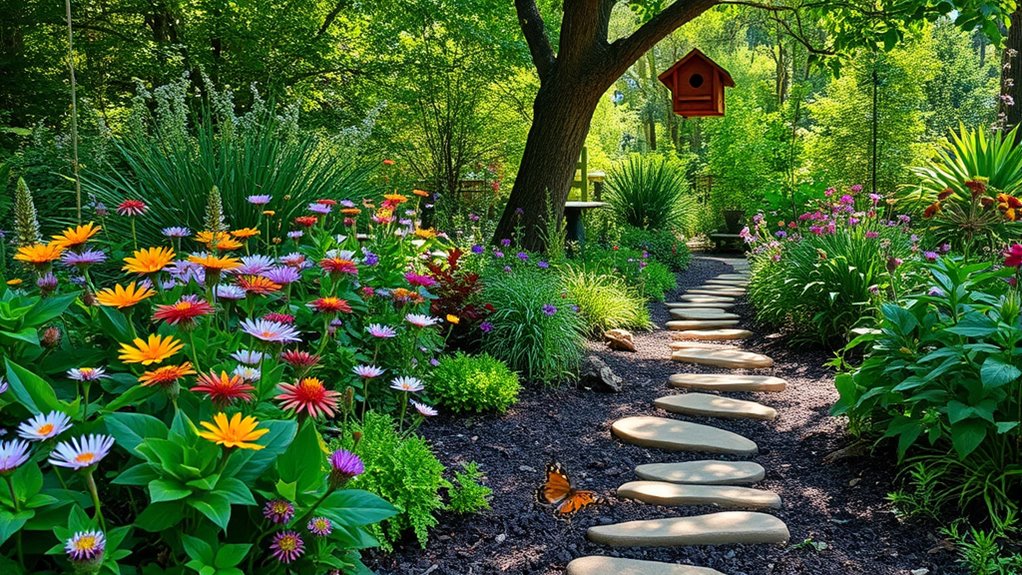

Sustainable landscaping turns your garden into a vibrant ecosystem that boosts biodiversity. By using native plants, you adapt to local climate and soil, requiring less water and maintenance. These plants provide essential habitat and food for local wildlife, like bees and butterflies, enhancing overall ecological balance. Incorporating features like rain gardens and permeable surfaces can further conserve water and reduce runoff. Keep exploring, and you’ll discover more ways to make your garden a sanctuary for nature.

Get business pricing on tech for your team
- Business-only prices and quantity discounts
- Tax-exempt purchasing
- Multiple users, one account, clear invoices
Key Takeaways
- Incorporate native plants to enhance biodiversity, as they are well-adapted to local conditions and support local wildlife.
- Design gardens with rain gardens to manage stormwater and promote water conservation while creating habitats for diverse species.
- Use permeable paving to reduce runoff and support groundwater recharge, contributing to a healthier ecosystem.
- Include a variety of plant species to attract pollinators and other wildlife, fostering a resilient and thriving garden environment.
- Educate the community about sustainable gardening practices to inspire collective efforts toward biodiversity and environmental stewardship.

Have you ever considered how your garden can positively impact the environment? Creating a sustainable landscape not only enhances your outdoor space but also supports biodiversity and promotes a healthier ecosystem. By choosing native plants for your garden, you can make a meaningful difference. Native plants are adapted to your local climate and soil, requiring less water and maintenance than non-native species. This means you’ll conserve water while providing a habitat for local wildlife, such as birds, butterflies, and beneficial insects.
Transform your garden into a sustainable haven by choosing native plants that support biodiversity and conserve water.
When you incorporate native plants into your garden, you’re playing an essential role in preserving the natural balance of your area. These plants have evolved alongside local wildlife, forming fundamental relationships that contribute to a thriving ecosystem. For example, many native plants provide food and shelter for pollinators like bees and butterflies, which are indispensable for plant reproduction. By planting these species, you’re not just beautifying your yard; you’re creating a sanctuary for these important creatures.
Water conservation is another key aspect of sustainable landscaping. Traditional lawns often require excessive amounts of water to stay green and lush, leading to unnecessary waste. By replacing sections of your lawn with drought-tolerant native plants, you can greatly reduce your water usage. These plants are designed to withstand local weather conditions, meaning they’ll thrive with minimal irrigation. You’ll save time, money, and valuable resources while still enjoying a vibrant garden.
Another way to support water conservation is by implementing rain gardens or permeable paving. These features can capture and absorb rainwater runoff, reducing the burden on stormwater systems and filtering pollutants before they reach local waterways. When you design your garden with these elements, you’re not only helping the environment but also creating a more resilient landscape. Additionally, incorporating cold-pressed vegetable juice into your diet can enhance your overall health while you enjoy gardening.
Incorporating sustainable practices into your gardening routine is a rewarding experience. Whether you’re planting a few native flowers or transforming your entire yard, every small change counts. You’ll not only enjoy a beautiful landscape but also be part of a larger movement toward environmental stewardship. So, take the plunge and explore the possibilities that sustainable landscaping offers. By making informed choices, you can cultivate a garden that thrives while giving back to the planet. Your efforts can spark a positive change for your local ecosystem and inspire others to follow suit.
Frequently Asked Questions
How Can I Attract Specific Wildlife to My Garden?
To attract specific wildlife to your garden, plant butterfly hostplants like milkweed and asters to draw in various butterfly species. Incorporate bird-friendly trees, such as oak and serviceberry, to provide shelter and food for birds. Adding a water source, like a birdbath, will also entice feathered visitors. Create diverse habitats by mixing flowers, shrubs, and native plants, ensuring your garden becomes a thriving ecosystem that supports the wildlife you want to attract.
What Native Plants Are Best for My Local Climate?
To choose the best native plants for your local climate, start by researching native plant selection specific to your region. Look for species that thrive in your area’s temperature, rainfall, and soil type, ensuring climate compatibility. Consider plants like coneflowers, milkweeds, and local grasses that attract wildlife and require less maintenance. By selecting the right native plants, you create a vibrant garden that supports local ecosystems and enhances your outdoor space.
How Do I Manage Pests Organically in My Garden?
Managing pests organically in your garden is like orchestrating a symphony. Start with companion planting; certain plants can repel pests naturally. For instance, marigolds dance alongside your vegetables, keeping aphids at bay. Use neem oil or insecticidal soap as gentle warriors against unwanted guests. Encourage beneficial insects, like ladybugs, to join the chorus. Regularly inspect your plants, and you’ll find harmony in a thriving, organic garden that flourishes without harsh chemicals.
Can Sustainable Landscaping Reduce Water Usage Significantly?
Yes, sustainable landscaping can substantially reduce water usage. By implementing rainwater harvesting systems, you can collect and utilize natural rainfall for irrigation. Additionally, incorporating xeriscaping principles helps you design a garden that thrives with minimal water, using drought-resistant plants and efficient irrigation techniques. Together, these strategies not only conserve water but also create a vibrant, low-maintenance landscape that benefits both your garden and the environment.
What Maintenance Practices Support Biodiversity in Gardens?
To support biodiversity in your garden, embrace composting techniques and mulch application. Think of it like a superhero cape for your plants! By composting, you enrich the soil with nutrients, fostering a thriving ecosystem. Applying mulch retains moisture, suppresses weeds, and provides habitat for beneficial organisms. These practices not only enhance your garden’s health but also create a vibrant space that attracts diverse wildlife, making your outdoor oasis come alive.
Conclusion
In the tapestry of nature, your garden can be a vibrant thread that weaves life together. By embracing sustainable landscaping, you’re not just planting flowers; you’re nurturing a symphony of biodiversity. Each bloom and buzzing bee creates a harmonious dance, inviting wildlife to take center stage. So, let your garden flourish as a sanctuary, where every leaf and petal tells a story of balance and beauty. Together, you can cultivate a thriving ecosystem that flourishes for generations.
Halloween Picks
halloween
As an affiliate, we earn on qualifying purchases.