TL;DR

Get business pricing on tech for your team
- Business-only prices and quantity discounts
- Tax-exempt purchasing
- Multiple users, one account, clear invoices
Meta’s Superintelligence Lab released Muse Wonder and Muse Wonder Full on Oct. 12, calling them its first frontier models. Meta reports competitive benchmark results and stronger MemoryBench performance than several rivals, but those comparisons are based on the company’s own testing.
Meta’s Superintelligence Lab released Muse Wonder and Muse Wonder Full on Monday, Oct. 12, introducing what the company describes as its first frontier models. The larger systems are intended for more demanding tasks than the earlier Muse Spark model, and Meta says they deliver competitive benchmark results while improving the ability to remember and use information supplied by users.
Meta’s model card reports that Wonder and Wonder Full achieve benchmark scores comparable to Fable 5.1 and GPT-6 Astra. The company also says the models perform better on complex work, including coding, than Muse Spark. These are Meta’s own test results; the supplied report does not include independent evaluations or enough benchmark detail to verify the comparisons.
Wonder will be available through the Meta Model API at $4 per million input tokens and $20 per million output tokens. Meta says Wonder Full will be limited to Muse Code subscribers and will not be offered through the API. The company plans to use both models to power the Muse agent, which is designed to perform tasks for users.
Meta is also emphasizing what it calls “active memory”: retaining and synthesizing user-provided information over time. The company says Wonder scored higher on MemoryBench than Fable, Opus and Astra. That result, too, is reported by Meta, and the source material does not provide independent confirmation or detailed scores.
A Bigger Move Into Frontier AI
The release marks a shift from Meta’s recent focus on a lighter, lower-latency model toward systems the company says can handle more complex work. Strong performance in areas such as coding and memory could matter for users who want an assistant to carry out multi-step tasks while drawing on information shared earlier.
The pricing and access limits also show that the two models are being positioned differently. Wonder is API-accessible, with published per-token rates, while Wonder Full is reserved for Muse Code subscribers. That split may affect which developers and customers can test the more capable version, though Meta has not provided further access terms in the material available.
The claims could also influence how Meta is judged against established AI developers. Comparable benchmark scores, if borne out by independent testing, would suggest Meta is competing more directly in the high-capability model market. For now, the reported results are company figures, so readers should distinguish Meta’s performance claims from verified third-party findings.
Products Worth Considering

Apple MacBook Air 13.6-inch Laptop with M5 Chip, 16GB Memory, 512GB SSD, Sky Blue

Bose QuietComfort Wireless Noise Cancelling Headphones, Twilight Blue
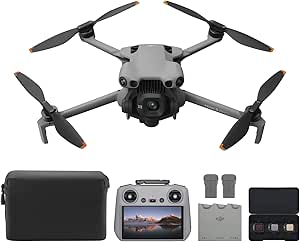
DJI Mini 5 Pro Fly More Combo with DJI RC 2
As an affiliate, we earn on qualifying purchases.
From Muse Spark to Wonder
Muse Wonder is the first frontier-model release since Alexandr Wang restructured Meta’s AI efforts in August of last year, according to the report. Since that reorganization, Meta had released Muse Spark, described as a lightweight model designed for low latency, and the Muse agent, while avoiding the kind of state-of-the-art releases associated with OpenAI and Anthropic.
Meta says the new models were trained at its Prometheus data center in central Ohio, which came online earlier this year. The company frames Wonder and Wonder Full as the next step in a scaling plan and links the release to its stated goal of developing personal AI assistants. The term “frontier” is Meta’s characterization in the source material, not an independently established category.
““Together, they mark the next step on our scaling ladder and a major leap toward personal superintelligence.””
— Meta, in its blog post about the models
Independent Tests Still Needed
The reported benchmark comparisons and MemoryBench result come from Meta’s testing. The source material does not provide independent evaluations, detailed scores, testing conditions or enough information to assess how the models compare across different tasks. It is also unclear how Wonder Full performs relative to Wonder beyond Meta’s description of it as a more capable, larger model.
Details about Muse Code subscription pricing, availability by region, API release timing and usage limits are not specified in the report. Meta has not supplied, in the material provided, a fuller account of how active memory is implemented, what information it retains, or what controls users have over that information. Those details will matter for people considering a model designed to recall personal information over time.
Access and Evaluation Ahead
Developers can access Muse Wonder through the Meta Model API at the announced token rates. Wonder Full is slated for Muse Code subscribers, while both models are expected to power the Muse agent. The source material does not give a launch schedule for wider access or additional details on subscription terms.
The next useful test will be whether independent evaluations reproduce Meta’s benchmark and memory claims, and how the models perform in practical coding and agent tasks. Further information on access, user memory controls and measured performance would clarify how the release compares with competing systems.
Key Questions
What did Meta release?
Meta released Muse Wonder and Muse Wonder Full on Oct. 12, 2026. The company describes them as its first frontier models.
How much does Muse Wonder cost?
Meta lists Wonder through its API at $4 per million input tokens and $20 per million output tokens. The report does not provide pricing for Muse Code subscriptions.
How can users access Muse Wonder Full?
Meta says Wonder Full will be available to Muse Code subscribers and will not be served through the Meta Model API. Further access terms are not specified in the source material.
Are the benchmark claims independently verified?
No independent verification is described in the source material. The comparisons with Fable 5.1, GPT-6 Astra and other models are based on Meta’s testing.
Source: rss